Estimating Atmospheric Trace Element Deposition Over the Global Ocean
A recently developed method based on the natural radionuclide beryllium-7 has provided a means to estimate the bulk atmospheric trace element deposition velocity

Some recent GEOTRACES science findings are reported below.
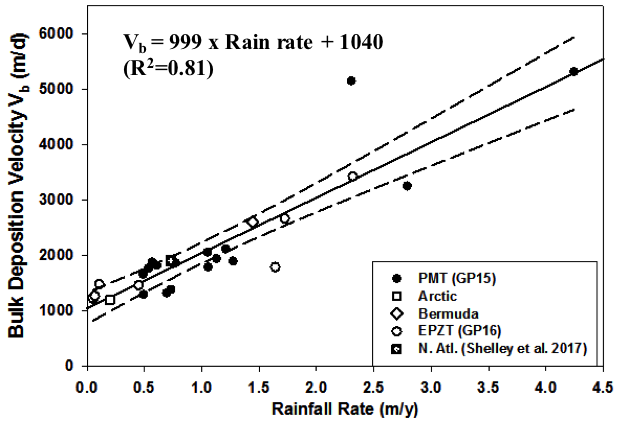
A recently developed method based on the natural radionuclide beryllium-7 has provided a means to estimate the bulk atmospheric trace element deposition velocity
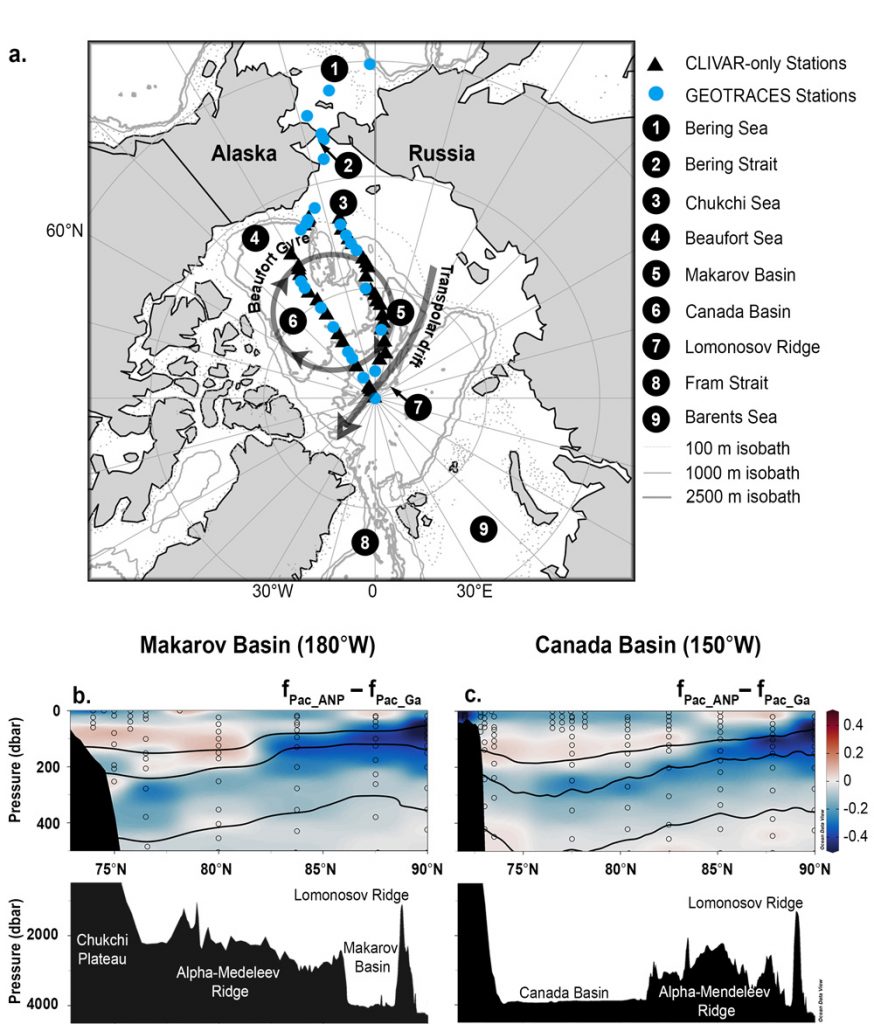
Whitmore and co-workers demonstrate that the dissolved gallium distribution provide a better water source deconvolution than the nutrient tracers
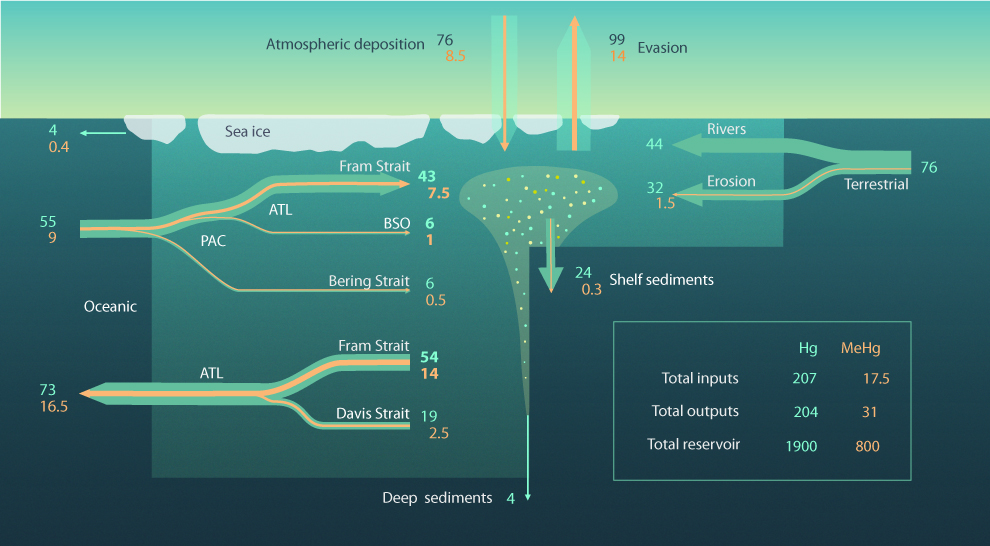
Using new observations acquired during GEOTRACES Arctic cruises, a refined arctic mercury budget has been established
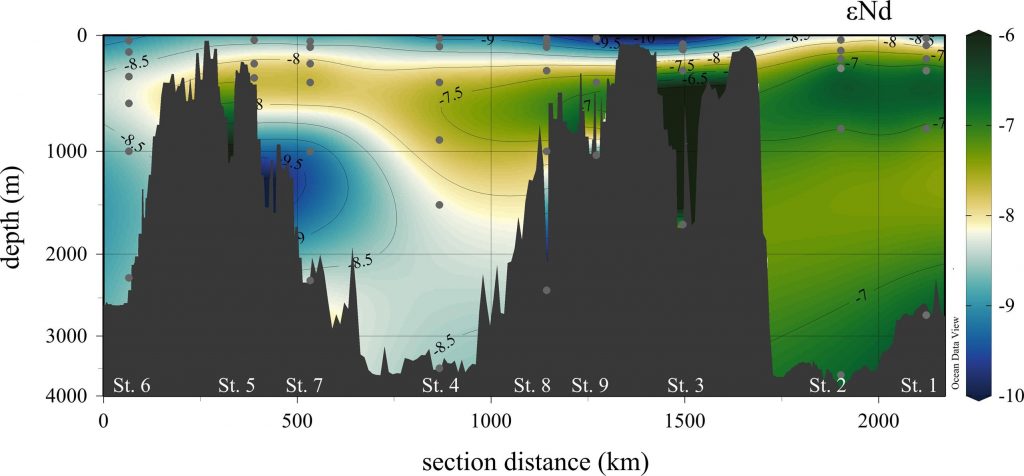
Garcia-Solsona and co-workers analysed 9 seawater stations around the central Mediterranean Sea
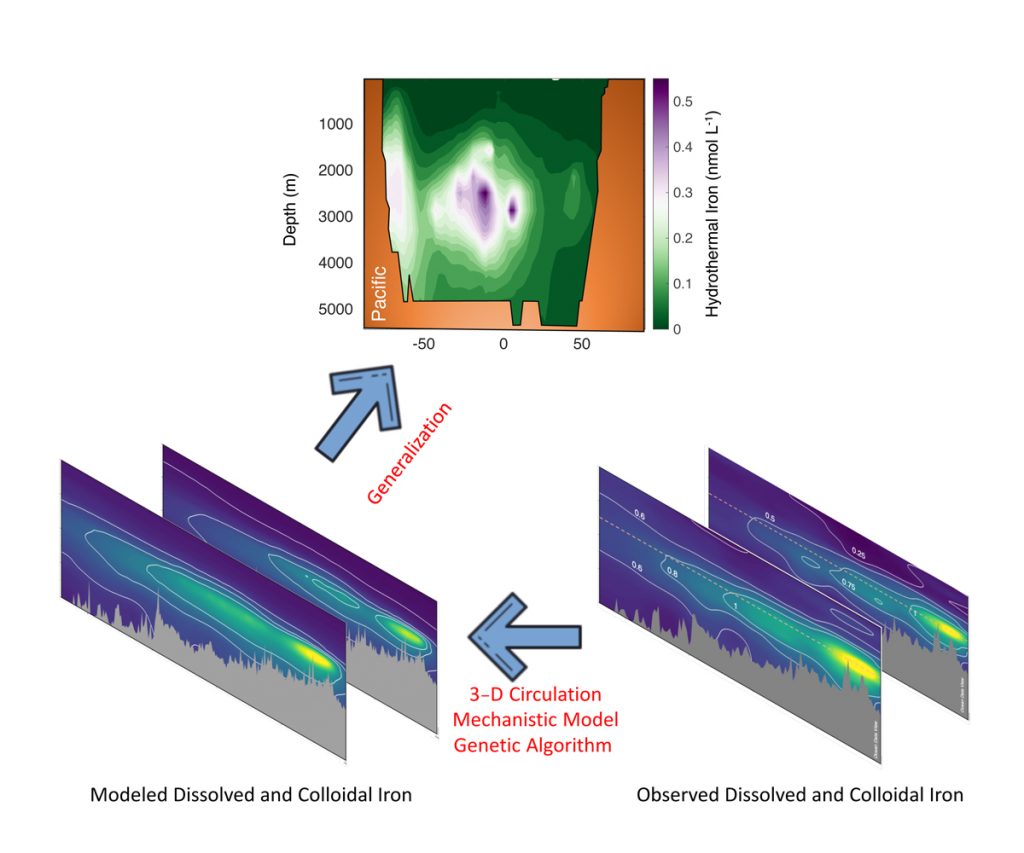
Roshan and collaborators present new observations of dissolved iron and its physical speciation in the South Pacific
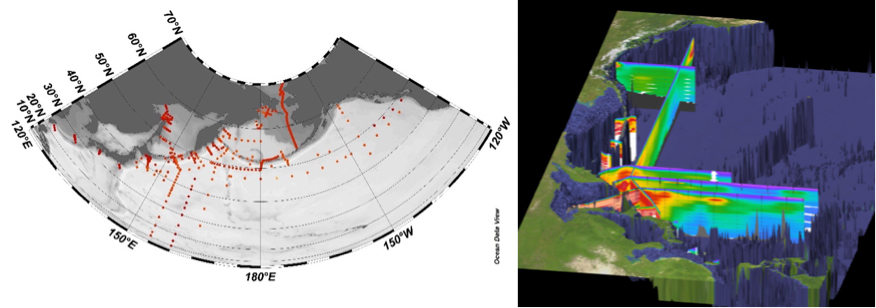
Nishioka and co-authors compiled comprehensive data sets of iron and macronutrients covering the whole subarctic Pacific…
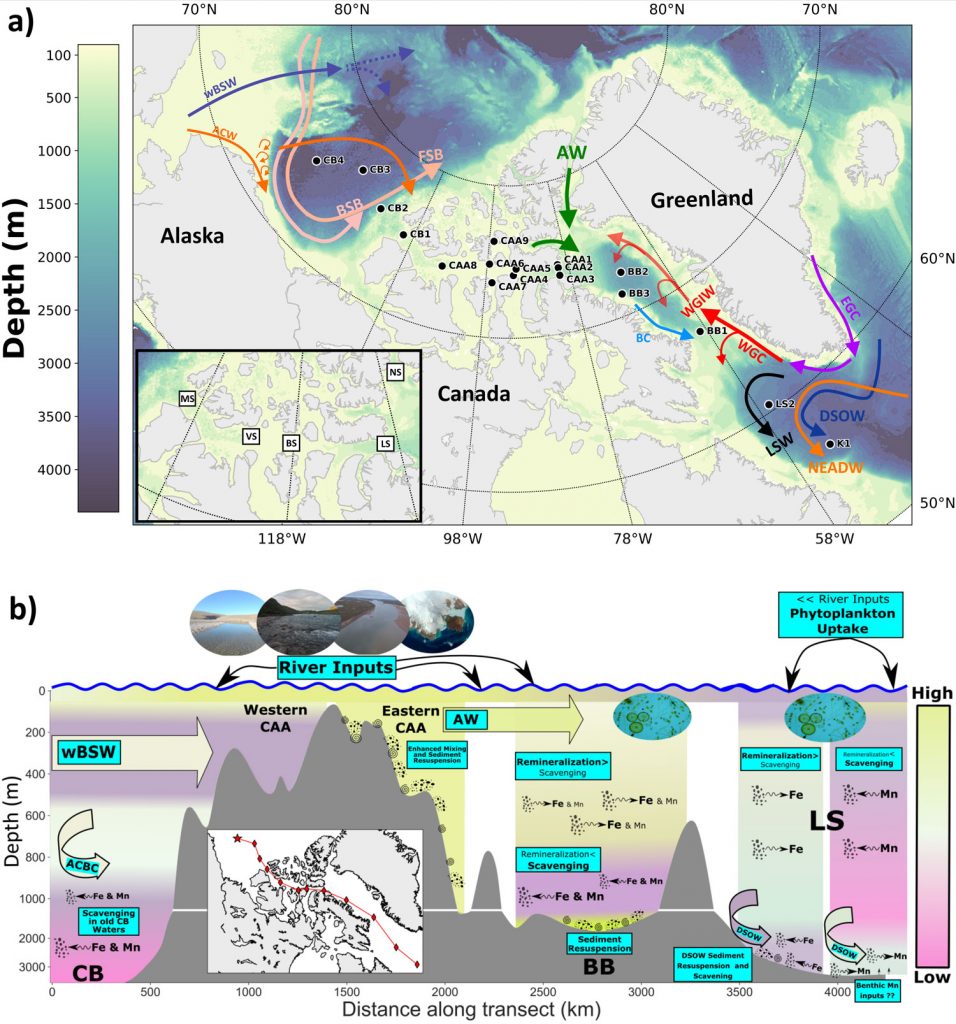
The spatial distributions and biogeochemical cycling of dissolved Fe (dFe) and dissolved manganese (dMn) across the Arctic Ocean were established during summer and fall 2015. The Canadian GEOTRACES transect extended […]
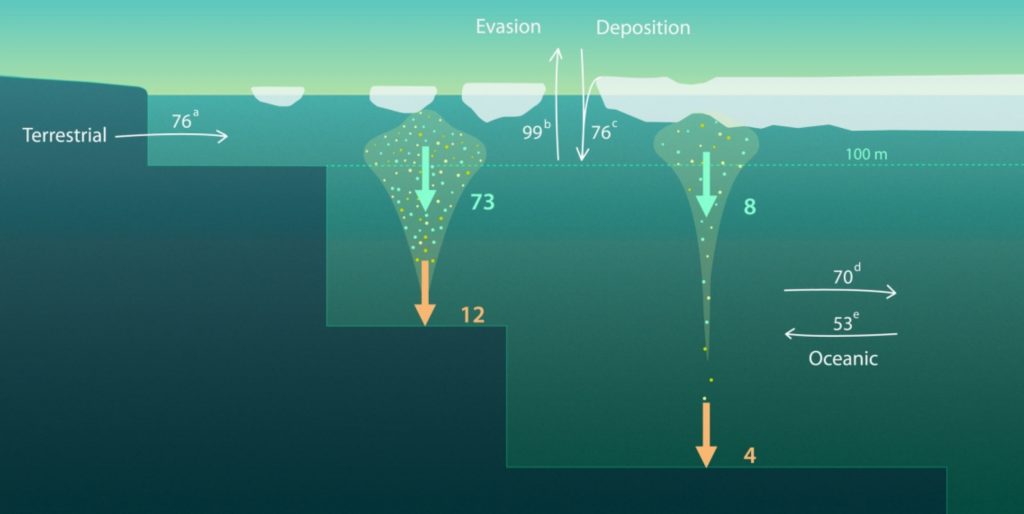
In the ocean, the residence time of mercury (Hg), is largely driven by two removal mechanisms: evasion to the atmosphere and downward export flux with settling particles. The later was […]
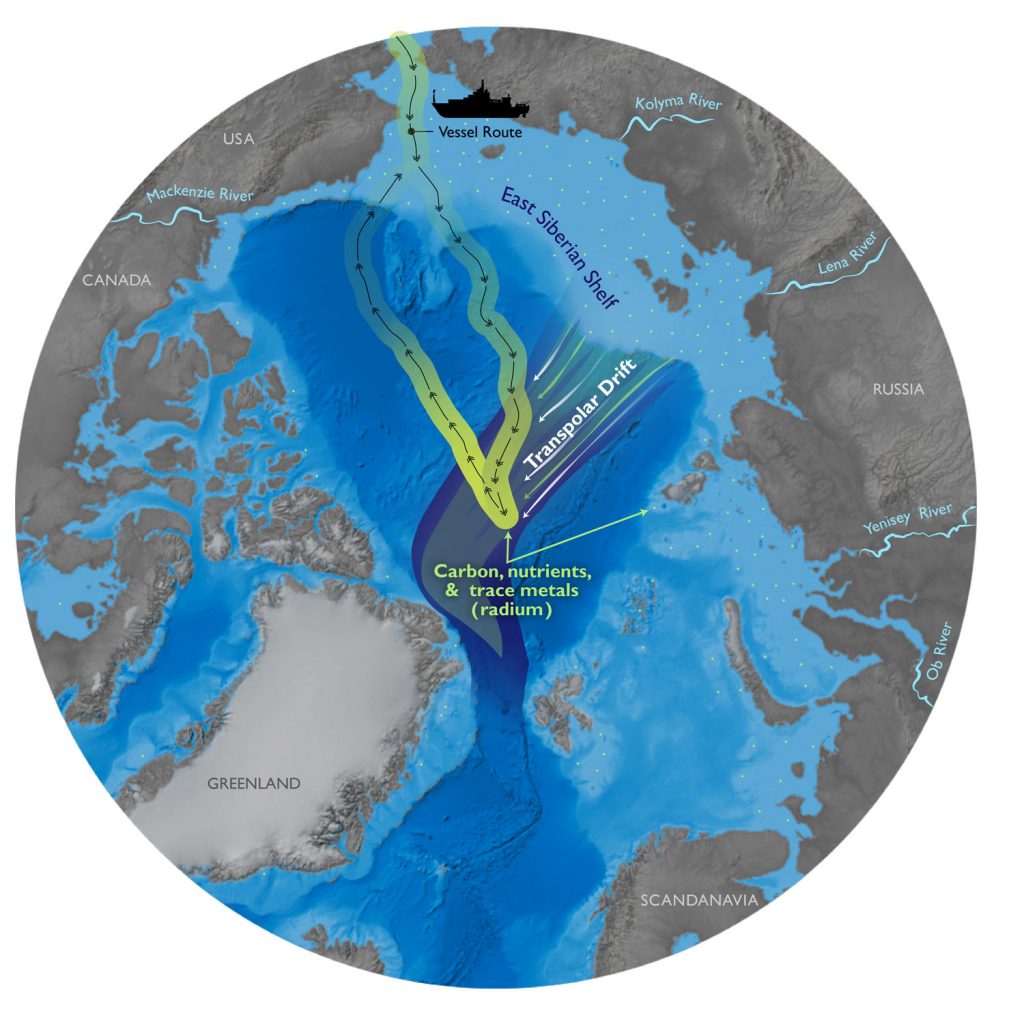
A new study found that freshwater runoff from rivers and continental shelf sediments are bringing significant quantities of carbon and trace elements into parts of the Arctic Ocean