The GEOTRACES Online Seminar Series is an initiative led by the Early Career Scientist (ECS) committee, held on a monthly basis. It aims to foster scientific exchange across the GEOTRACES community and beyond by bringing together senior scientists and early-career researchers around shared themes in trace element and isotope biogeochemistry.
Seminar format:
Each seminar will focus on one coherent topic and feature two connected talks:
– A senior scientist providing synthesis, context, and big-picture framing
– An early-career scientist presenting new data, methods, or emerging perspectives
Schedule:
The series will run monthly from April to November 2026 (with a break in July), with seminars planned for the last Tuesday of each month. Plus, a special end-of-year seminar around mid-December.
Seminars will be held at either 09:00 CET/CEST or 15:00 CET/CEST, depending on the speakers’ locations, to facilitate participation across different regions. Each seminar will last about one hour.
Platform: Zoom
A single recurring link will be used for all seminars: click here to access the seminar.
If needed, you can also join manually using: Meeting ID: 636 5773 3493 / Passcode: 651026
Recordings from past seminars:
You can watch recordings of past seminars on the GEOTRACES Online Seminar YouTube playlist, available here, or via the following OneDrive link: 2026OnlineSeminars.
Future seminars:
Date/Time: October 27th, 15:00 CET
Topic: Hydrothermal Impact on Ocean Biogeochemistry
Moderator: Lise Artigue
Speakers: Christopher German (Woods Hole Oceanographic Institution, USA) & Laura Moore (University of Victoria, Canada)
Date/Time: November 24th, 15:00 CET
Topic: Sediment-Water Interface Processes & Boundary Exchange
Moderator: Zhouling Zhang (GEOMAR, Germany)
Speakers: Florian Scholz (University of Hamburg, Germany) & Rhiannon Jones (British Antarctic Survey, UK)
Date/Time: December 15th, 15:00 CET
Topic: Working backwards: How do we know a paleo-proxy works?
Moderator: Layla Creac’h (IFREMER – Centre Bretagne, France)
Speakers: Tristan Horner (Woods Hole Oceanographic Institution, USA) & Matthew Jeromson (University of Canberra, Australia)
Past seminars:
SEMINAR #5 – SEPTEMBER 2026
Biogeochemical Cycling of Redox-Sensitive Metals in Oxygen Minimum Zones
Recording: https://youtu.be/26hetE2VHwU
Date/Time: September 29th, 15:00 CEST
Moderator: Dr. Yang Xiang (Louisiana State University, USA)
Flyer
The dynamics of cross-shelf transport in eastern boundary regimes
Prof. James W Moffett (University of Southern California, USA)
Abstract: Continental margins are an important source of trace elements and isotopes to the interior of ocean basins involving a combination of benthic fluxes, fluvial sources and physical processes. The analysis of multiple isotope tracers and metals within GEOTRACES, combined with Regional Ocean Modeling System (ROMS) models have provided critical insight into cross-shelf transport.
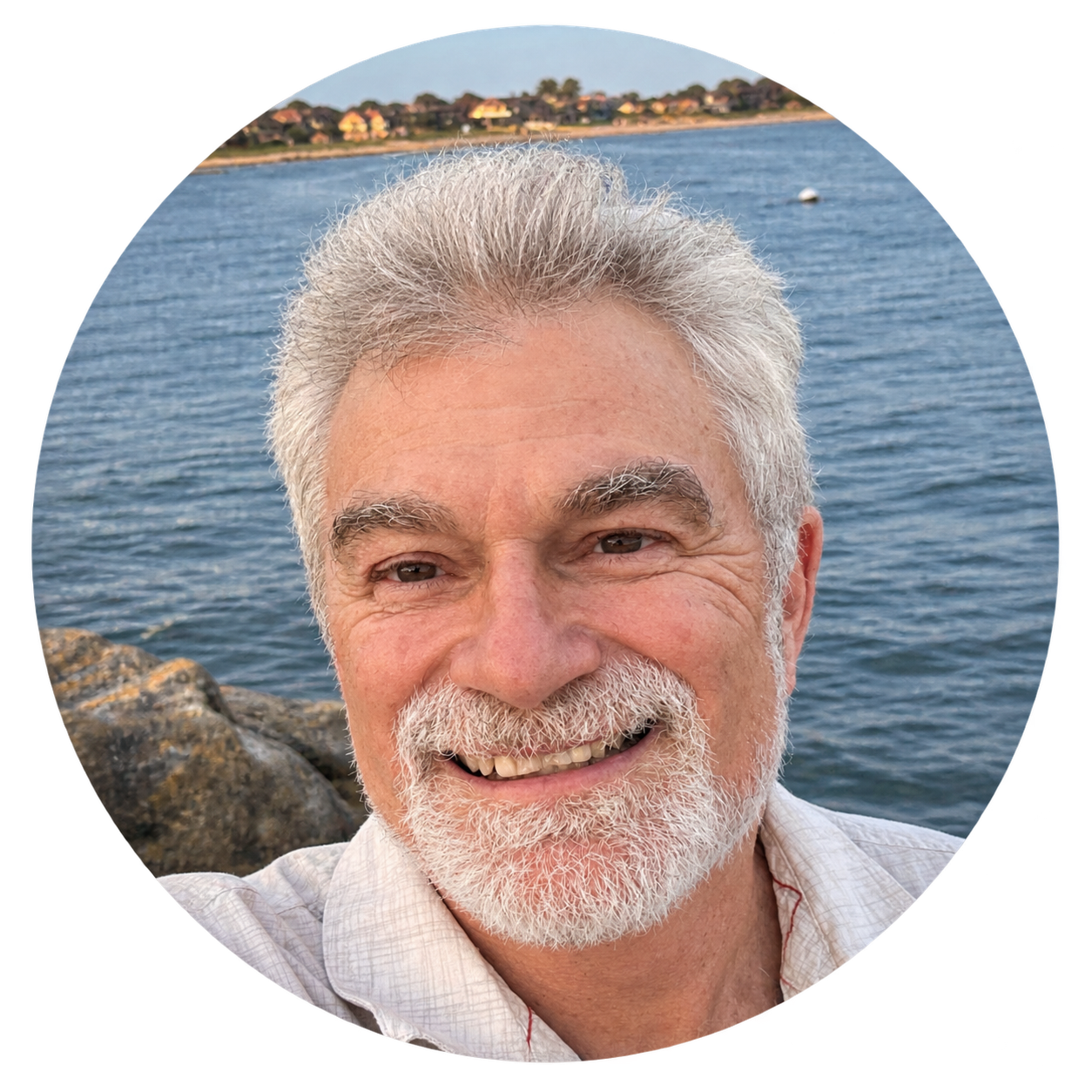
University of Southern California, USA
Organic complexation of dissolved manganese(III) in hypoxic coastal waters
Jessalyn E. Davis (PhD candidate at the University of Washington, USA)
Abstract: The oxidation state of manganese (Mn) in seawater dictates its potential reaction pathways and thus its interactions in the biogeochemical cycling of other trace elements. In this talk, I will highlight advancements in the characterization of the organic Mn pool and discuss how differing oxygen regimes impact the stabilization of dissolved Mn(III) in the Gulf of Mexico.
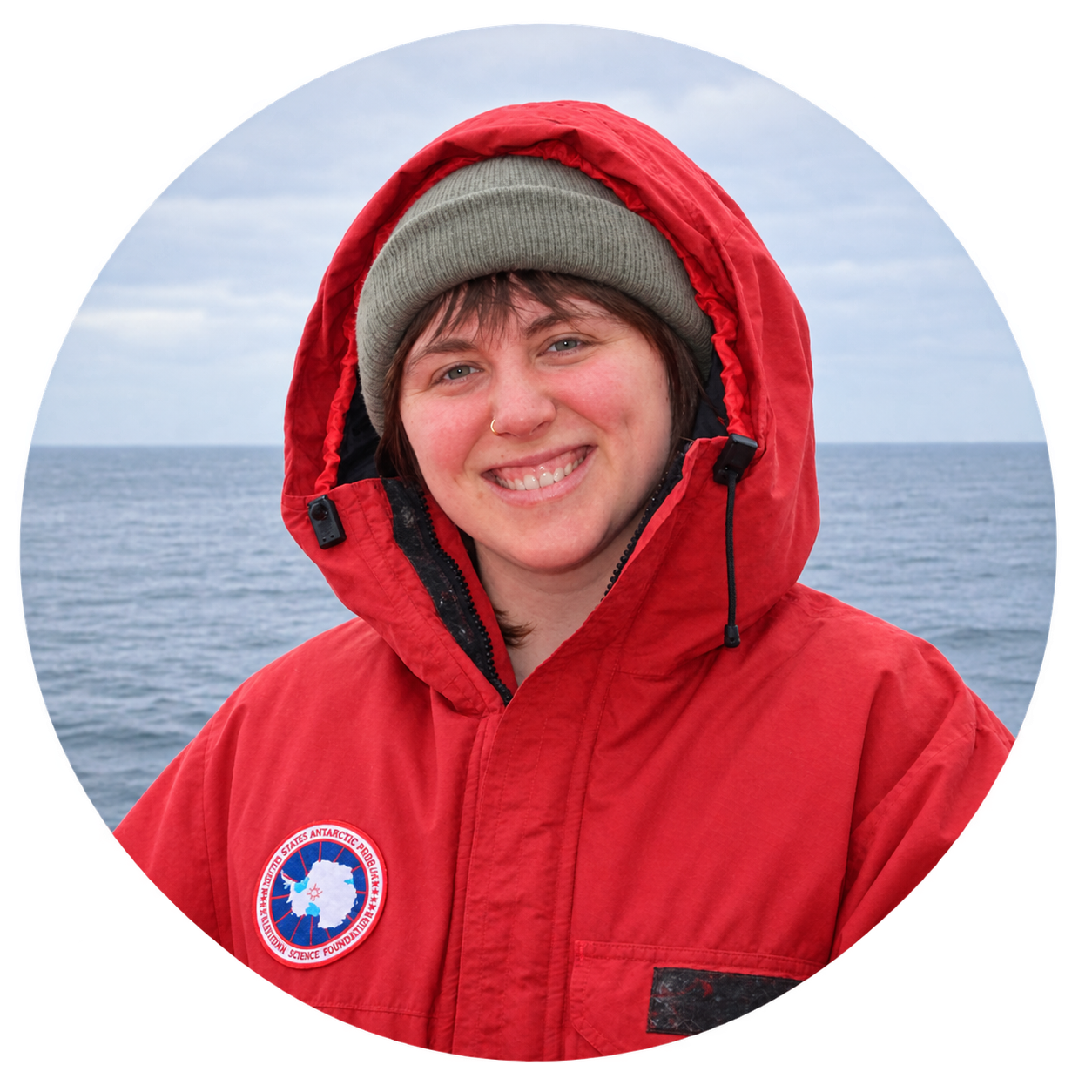
PhD candidate at the University of Washington, USA
SEMINAR #4 – AUGUST 2026
Particle dynamics, scavenging & aggregation
Recording: https://youtu.be/mZAOa0o3M2E
Date/Time: August 25, 2026 @ 15:00 CEST
Moderator: Nolwenn Lemaitre
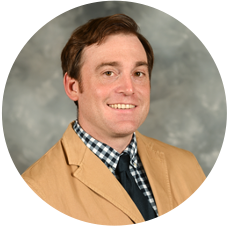
From adsorption to regional boundary scavenging: bridging scales of trace element removal from the ocean
Prof. Christopher Hayes (University of Southern Mississippi)
Abstract: Particulate matter in seawater acting as a removal term for trace elements, or chemical scavenging, has been recognized since the 1950’s. In this talk, I review the history of the role of scavenging in chemical oceanography and results from our group showing how productive gyres, upwelling zones, hydrothermal plumes and nepheloid layers can all be seen as regional centers of scavenging removal.
University of Southern Mississippi
Particle composition effect on trace metal scavenging in the global ocean
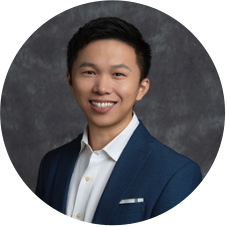
Asst. Prof. Yang Xiang (Louisiana State University)
Abstract: Different particle phases vary in their ability to scavenge trace elements and their isotopes (TEIs). In this talk, I will highlight the disproportionate importance of manganese oxides in scavenging multiple TEIs in the global ocean, despite their relatively low abundance. I will also discuss recent advancements in particle scavenging models that incorporate surface area into parameterisations.
Louisiana State University
SEMINAR #3 – JUNE 2026
Atmospheric aerosol deposition to the global ocean
Recording: https://youtu.be/VGVbu5pd8vQ
Date/Time: June 30, 2026 @ 15:00 CEST
Moderator: Dr. Tal Benaltabet (ETH Zurich, Switzerland)
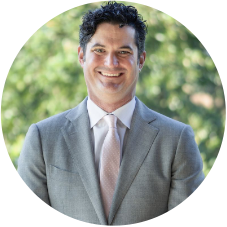
Aerosols as a source of trace metals to the open ocean
Prof. Cliffton Buck (University of Georgia)
“Particles carried through the atmosphere link the land and open ocean beyond the influences of rivers and the continental shelf. The importance of atmospheric deposition is a function of particle composition and size, atmospheric processing, and flux. Accurately assessing this process is uniquely challenging, and current knowledge gaps hamper our understanding of marine biogeochemical cycles.”
University of Georgia, USA
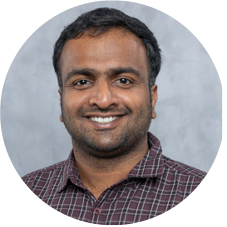
Atmospheric trace elements over the Southern Ocean
Dr. Prema Piyusha Panda (Stellenbosch University)
“In this talk, I will discuss my current work on atmospheric trace elements over the Southern Ocean. I will discuss the possible sources of atmospheric trace elements over the southern hemisphere, impact of wildfires on aerosol trace element composition and their subsequent influence on surface ocean biogeochemistry.”
SEMINAR #2 – MAY 2026
Trace metal input in polar environments
Recording: https://youtu.be/RCPCBOiYw-k
Date/Time: May 26, 2026 @ 15:00 CEST
Moderator: Dr. Hung-An Tian (Constructor University, Germany)
Are glaciers a source of trace metals to the ocean?
Prof. Jon Hawkings, University of Pennsylvania
“In this talk, I will introduce the idea of glacial systems as producers and exporters of trace metals, focusing on how glaciers mobilize trace metals and the phases (i.e. soluble vs colloidal vs particulate) in which trace metals are delivered to marine systems.”
University of Pennsylvania
Trace metals in the coeastal Arctic Ocean
Prof. Laramie Jensen, Columbia University
“In this talk I will discuss my work on trace metals in the Arctic Ocean since the 2015/2016 GEOTRACES cruises and how we can build from the wealth of information provided by GEOTRACES to learn more about the role of rapid climate change on trace metal distribution.”
Columbia University
SEMINAR #1 – APRIL 2026
Data synthesis, modelling and integration
Recording: https://youtu.be/u_0TJkBe_Uk
Date/Time: April 28 @ 15:00 CEST
Moderator: Dr. Anh Pham (University of California, Los Angeles)
Bringing it all together: using models to build process understanding
Dr. Gregory De Souza (ETH Zurich, Switzerland) – Senior Scientist
Abstract: Two decades of GEOTRACES observations provide us with a wealth of TEI data at a range of spatial scales. Inferring controlling processes from these data requires an understanding of how sources and sinks — whether in the open ocean or at its margins — interact with ocean circulation to produce observed distributions of dissolved species. In this talk, I will give an overview of the diversity of approaches that have used conceptual and/or numerical models to synthesize observational data into an understanding of TEI cycling in the sea and at its interfaces.
Dr. Gregory De Souza
ETH Zurich, Switzerland
Mapping ocean trace metal distributions: A global data-driven view of lead and its isotopes
Dr. Arianna Olivelli (Flanders Marine Institute, Belgium) – Early Career Scientist
Abstract: Despite the rapid growth of GEOTRACES observations, resolving large-scale distributions of trace metals remains challenging due to their sparse and heterogeneous coverage. In recent years, machine learning (ML) techniques have offered new opportunities to advance data-driven oceanographic research at global and regional scales. In this talk, I will present my work to develop the first global maps of lead (Pb) concentrations and isotope compositions from surface to depth using the tree-ensemble algorithm XGBoost and explainable ML tools. These maps provide an observation-based view of Pb distributions and variability that is difficult to achieve from measurements alone. I will discuss key methodological choices, lessons learned, and potential future applications of these maps. Additionally, I will explore the use of different ML approaches for the synthesis and integration of in situ observations within the wider GEOTRACES context.
Dr. Arianna Olivelli
Flanders Marine Institute, Belgium