
Microbial trace metal transport in distinct water masses of the Southern Indian Ocean
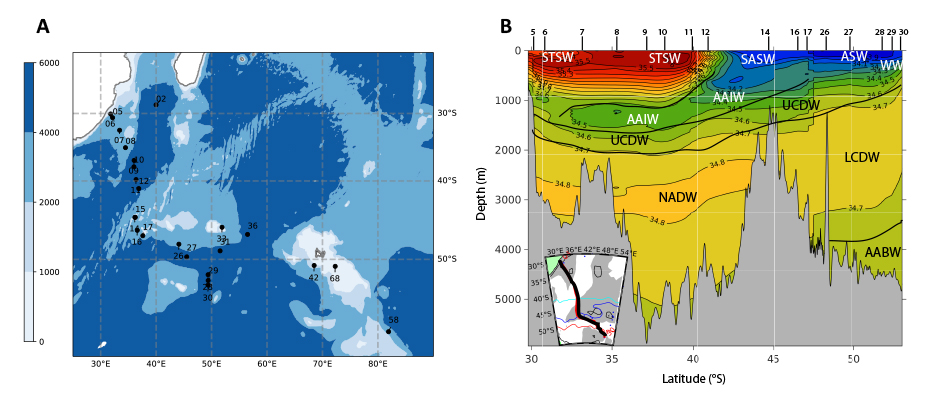
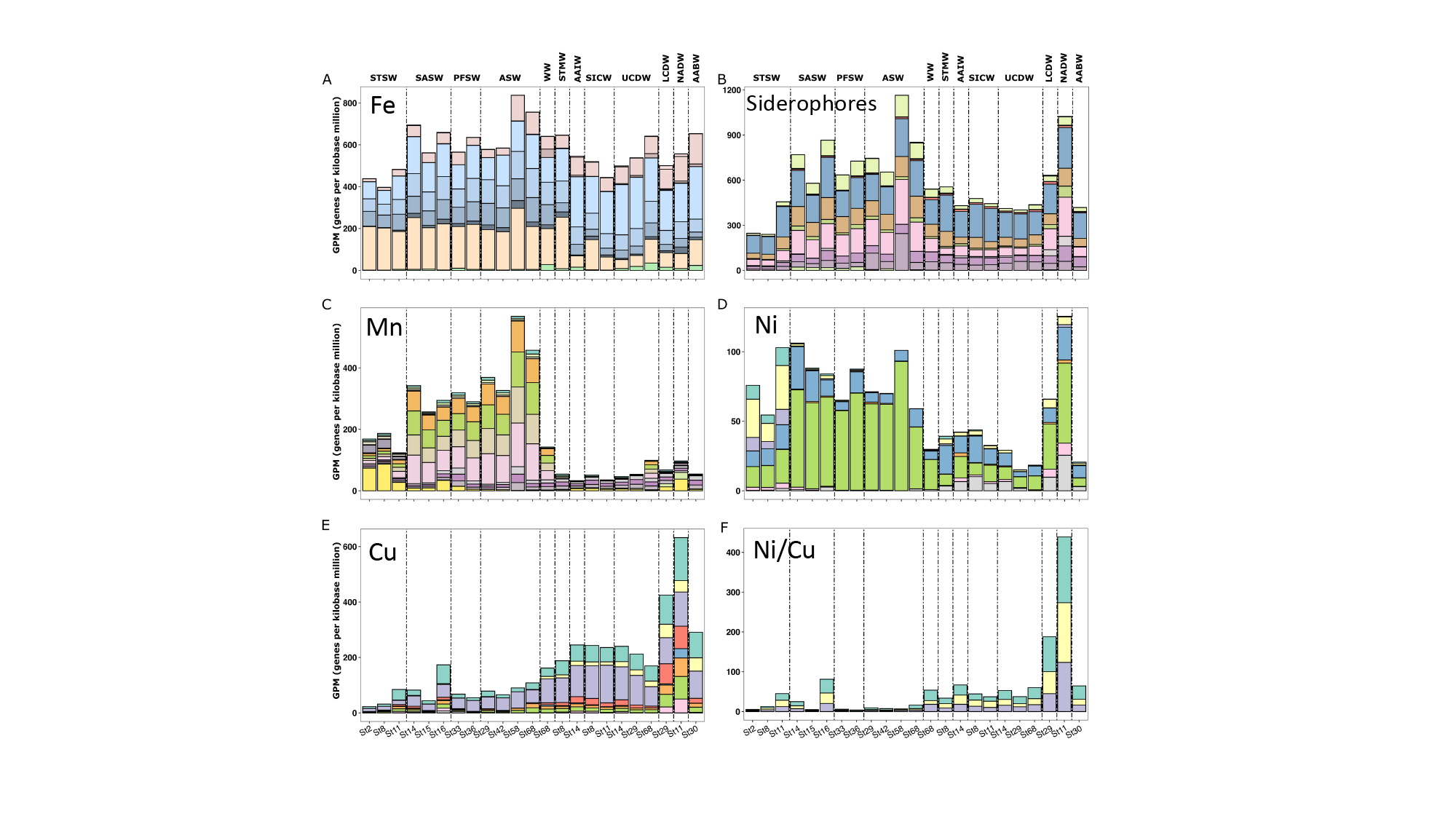
Bioactive trace metals are vital co-factors for microbial enzymes, driving essential metabolic processes and element cycling. Microbes regulate intracellular metal levels via membrane transporters, which mediate uptake and efflux. These processes may create feedback loops between microbes and their environment. Whether these processes vary among trace metals and across habitats is presently not known. Zhang and colleagues (2026, see reference below) used genes coding for membrane transporters as proxies to map the distribution of the uptake and efflux of the trace metals iron (Fe), manganese (Mn), nickel (Ni) and copper (Cu) in surface waters across a latitudinal transect and in distinct water masses of the Southern Indian Ocean during the SWINGS (South West Indian Ocean GEOTRACES GS02 Section) cruise. They observed an enrichment of efflux genes in North Atlantic Deep Water and Lower Circumpolar Deep Water suggesting that microbes could shape trace metal speciation and distribution. Concurrently, the distinct gene repertoire of key bacterial taxa in these old water masses may reflect adaptation to the unique chemical conditions, with trace metals acting as selective drivers. This study highlights the role of microbial-metal homeostasis in deep ocean biogeochemistry, with potential implications for understanding trace metal cycling and microbial adaptation in distinct marine habitats.
Reference:
Zhang, R., Debeljak, P., Gadegaonkar, S. S., Baudet, C., Ringard, A., Blain, S., & Obernosterer, I. (2026). Microbial membrane transporters reveal trace metal niche adaptation in distinct water masses of the Southern Ocean. Microbiome, 14. Access the paper: 10.1186/s40168-025-02293-6