
Elevated methylmercury level in Arctic rain and aerosol linked to oceanic dimethylmercury emissions
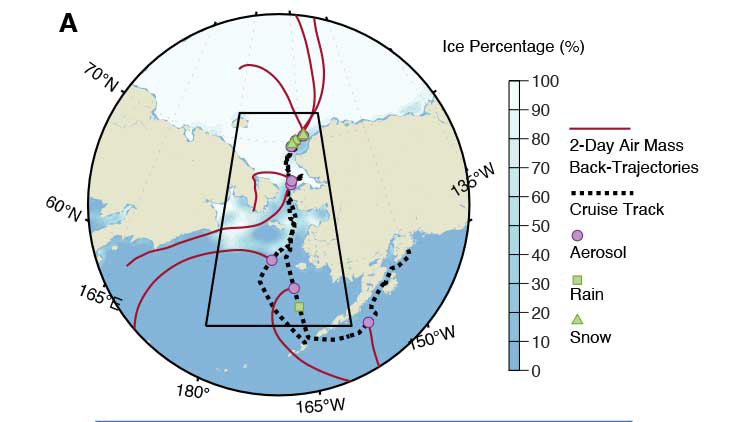
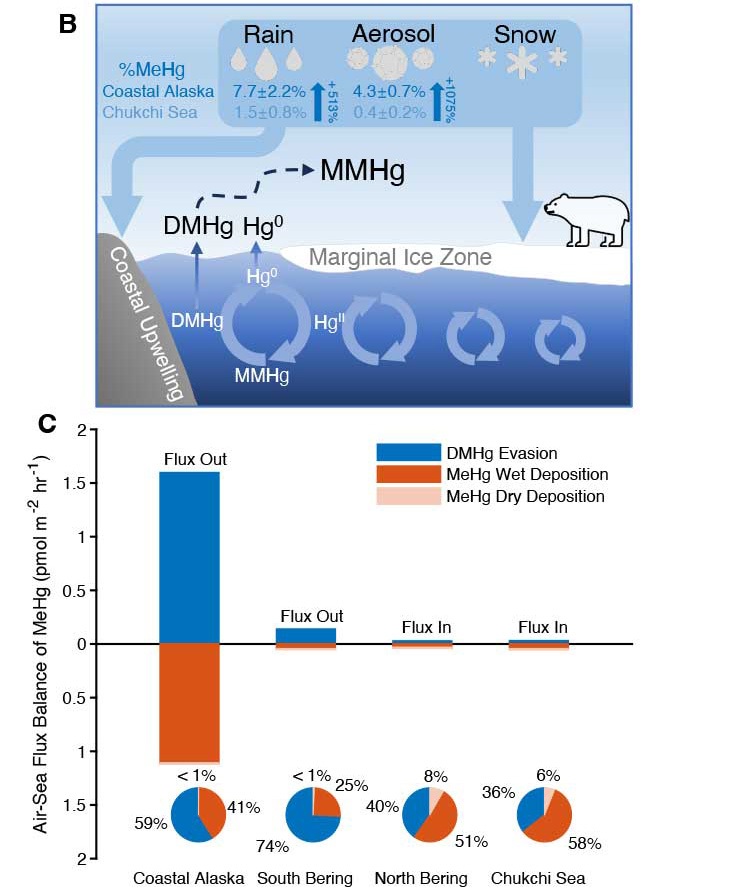
He and colleagues (2025, see reference below) conducted a research cruise from coastal Alaska through the Bering and Chukchi Seas in May-June 2021, and made high-resolution measurements of dimethylmercury (DMHg) in surface seawater. Their study revealed that DMHg released from the ocean surface is converted in the atmosphere into methylmercury (MeHg), the most toxic and bioaccumulative form of mercury. The study showed that MeHg can be transported over long distances in the atmosphere before returning to the surface ocean via precipitation and aerosol deposition, potentially contaminating fish and marine mammals in ecosystems far from the original DMHg source. The team observed a 5-fold increase in the MeHg-to-total Hg fraction in rain and a 10-fold increase in aerosols, both closely linked to atmospheric inputs from the elevated surface DMHg concentrations. By quantifying the various fluxes involved, the study highlights a previously underappreciated pathway of Hg transport, underscoring its significance to human health and ecological risk in the rapidly changing Arctic environment.
Reference:
He, Y., Inman, H., Kadko, D. C., Stephens, M. P., Hammond, D. E., Landing, W. M., & Mason, R. P. (2025). Elevated methylmercury in Arctic rain and aerosol linked to air-sea exchange of dimethylmercury. Science Advances, 11. Access the paper:10.1126/sciadv.adr3805