
Drawing the future of phytoplankton in a changing ocean
Phytoplankton development is strongly linked to the dissolved iron availability in the surface waters. Iron’s behavior is sensitive to warming, stratification, acidification and de-oxygenation. In a changing ocean, these processes in addition to nutrient co-limitation interactions with iron biogeochemistry will all strongly influence phytoplankton dynamics. This paper establishes the potential future shifts in multiple facets of iron biogeochemistry, from cellular physiology to ocean circulation. Possible impacts of these multiple changes on diatoms and trichodesmium are illustrated in the figure below. This work warns us on the urgent need to improve our present knowledge of the micronutrient cycle forcing, in order to better predict their future behaviors.
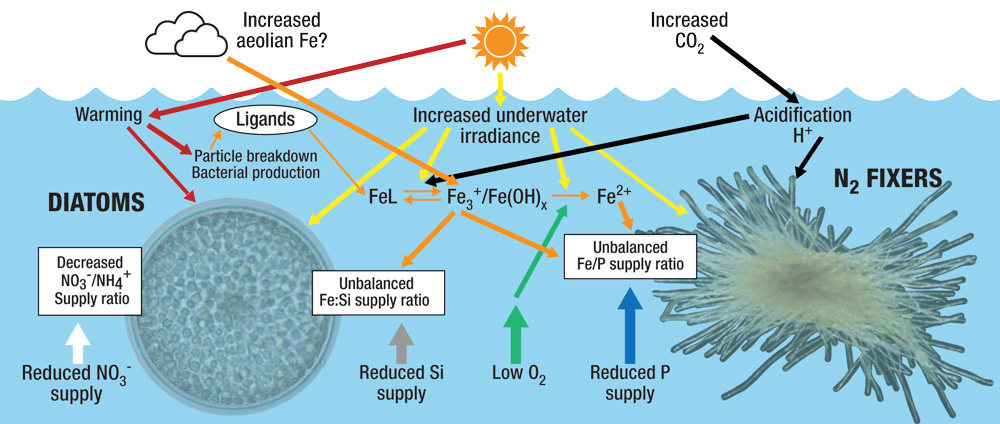
Figure: Interactive influences of the changing ocean iron cycle on diatoms and nitrogen-fixing cyanobacteria. Iron biogeochemistry will respond to global change-related warming (red), increased light (yellow), acidification (black), loss of oxygen (green), and lowered inputs of the nutrients nitrate (white), silicate (grey) and phosphate (blue). This will have direct consequences for the growth and physiology of both phytoplankton groups, as well as indirect effects on critical resource supply ratios (boxes). Important components of the marine iron cycle responding to environmental change include inputs from dust, complexation by organic ligands, redox chemistry, and biological availability (orange). Click here to view the figure larger. (adapted from Hutchins and Boyd 2016, with thanks to J. Brown for graphics)
Reference:
Hutchins, D. A., & Boyd, P. W. (2016). Marine phytoplankton and the changing ocean iron cycle. Nature Climate Change, 6(12), 1072–1079. DOI: 10.1038/nclimate3147