
To Ba or not to Ba: Evaluating water column excess particulate barium as a proxy for water column respiration
Rahman and co-workers (2025, see reference below) examine the relationship between pBaxs (excess particulate barium (Ba), in other words particulate Ba in excess of that predicted from crustal values) and organic matter respiration in the water column along the GEOTRACES GA03 North Atlantic and GP16 Eastern Tropical Pacific transects. Others have proposed pBaxs as a respiration proxy, and this new work now examines the pBaxs proxy across two ocean basins and different biogeochemical provinces. Furthermore, the authors test the pBaxs proxy against respiration rates calculated using 230Thorium‐normalized particulate organic carbon (POC) fluxes in the water column.
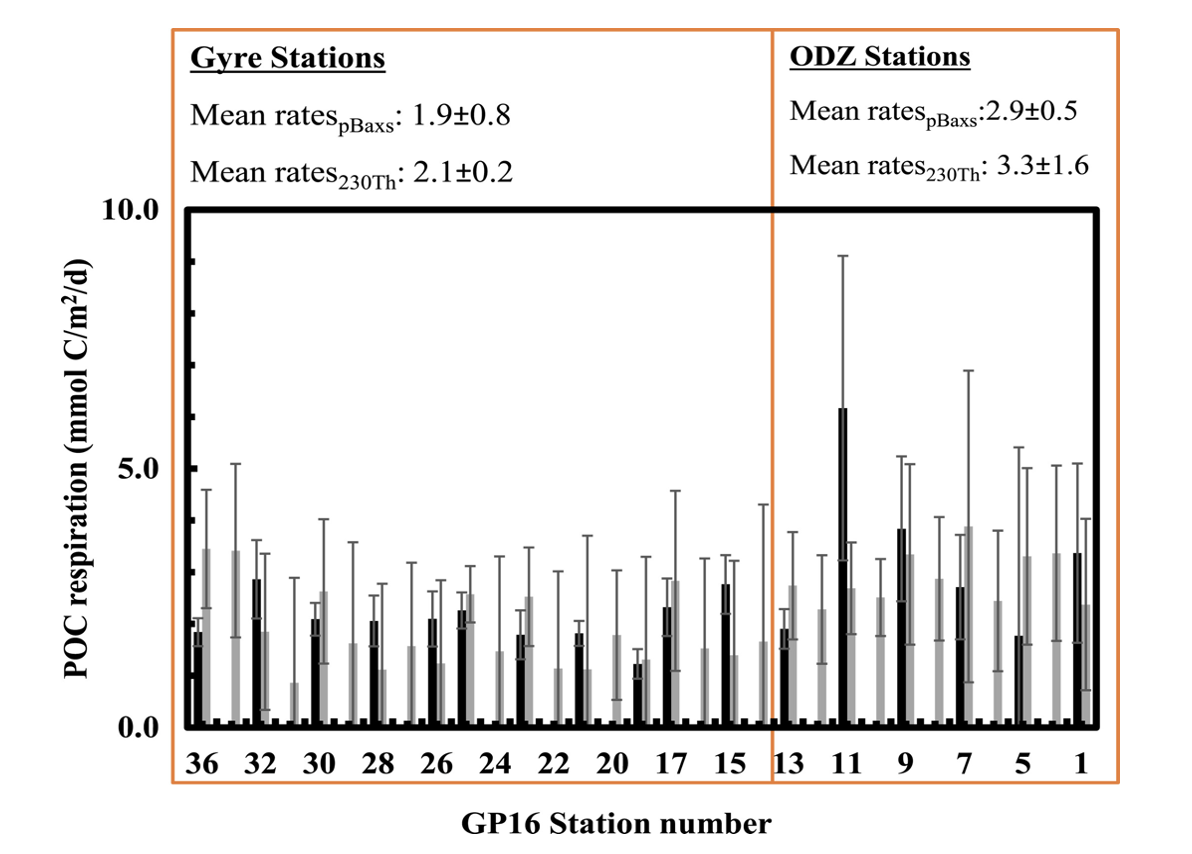
Respiration rates estimated from pBaxs were significantly different between biogeochemical provinces (i.e., gyre vs. oxygen deficient zone stations). Also, rate estimates using depth weighted average pBaxs concentrations and Th‐normalized POC fluxes in the 100–500 m interval agreed well within biogeochemical provinces where comparisons could be made. Thus, average pBaxs concentrations provide reasonable respiration rate estimates in the 100–500 m depth interval, providing a viable alternative if other methods are not available.
Reference:
Rahman, S., Shiller, A. M., Anderson, R. F., Hayes, C. T., & Pavia, F. (2025). To Ba or not to Ba: Evaluating water column excess particulate barium as a proxy for water column respiration. Global Biogeochemical Cycles, 39, e2025GB008671. Access the paper: https://doi.org/10.1029/2025GB008671