
Seasonal variation of the dissolved iron ligands in the South Atlantic sector of the Southern Ocean
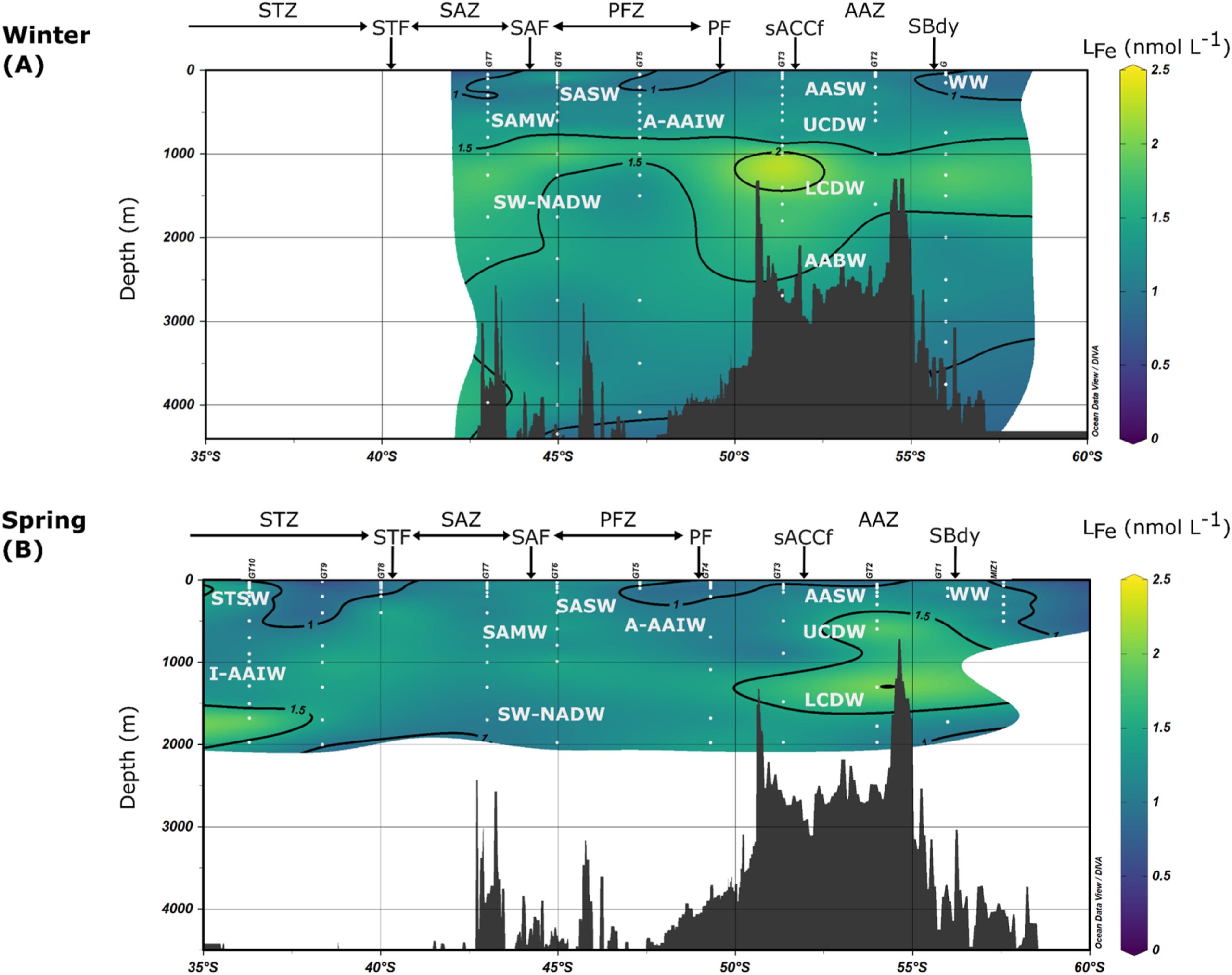
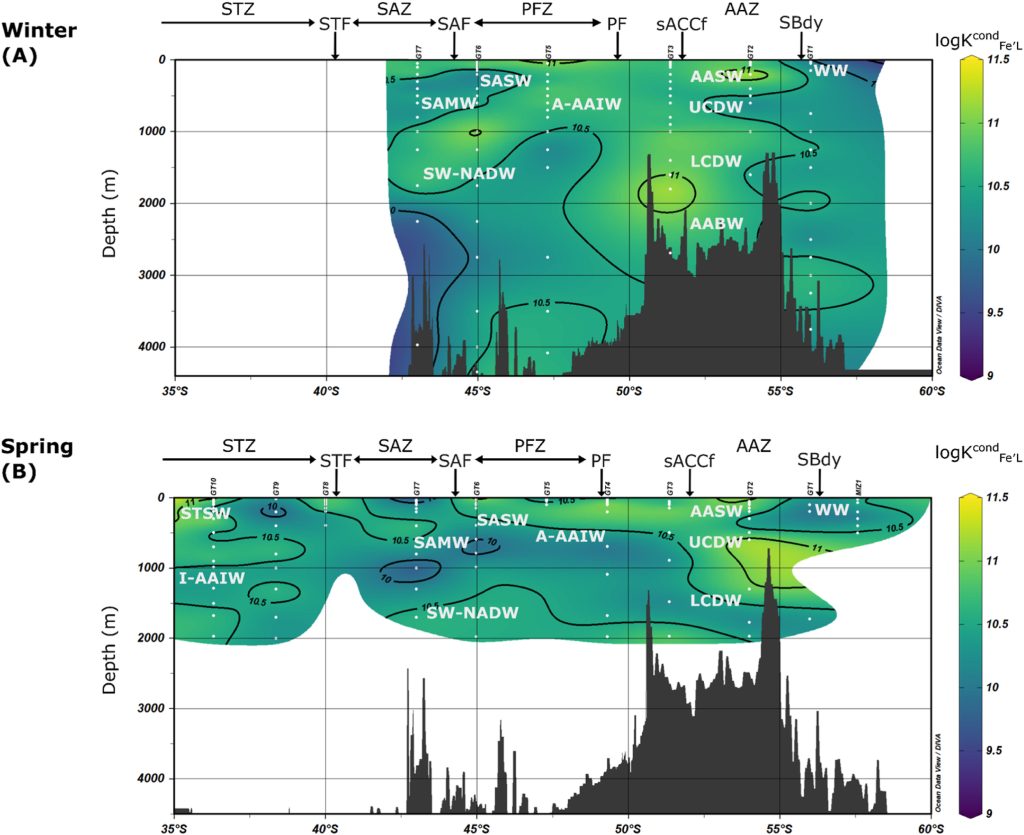
In the ocean, up to 99% of the dissolved iron (dFe) is strongly complexed with organic compounds (known as iron-binding ligands (LFe)). Ligands are a master piece in the oceanic iron (Fe) cycle, since they enhance Fe solubility, increase the residence time of Fe in surface water, reduce Fe3+ to Fe2+), and eventually increase its bioavailability to phytoplankton and bacteria in limiting environments. The study of Coussy and colleagues (2026, see reference below) provides new insights into the processes controlling iron complexation in the South Atlantic sector of the Southern Ocean. The original result is the first comparison of Fe-binding ligand characteristics between winter and spring in the studied area. Distinct seasonal and vertical patterns were observed in both ligand concentrations and conditional stability constants (see figures 1 and 2). In surface waters and during winter, weaker ligands are incorporated into sea ice, while spring melting and enhanced productivity release both stored and newly produced ligands, expanding the ligand reservoir. Deep water ligand’s abundances are more related to island effects (inputs) and bacterial remineralization. The seasonal imprint affects more the ligands concentrations than their binding strength.
Reference:
Coussy, V., Santana-Casiano, J. M., González-Dávila, M., González-Santana, D., Mtshali, T. N., Ryan-Keogh, T. J., Samanta, S., Roychoudhury, A. N., & González, A. G. (2026). Seasonal characterisation of iron-binding ligands in the South Atlantic sector of the Southern Ocean (Scale cruises, 2019). Marine Environmental Research, 218, 107987. Access the paper: 10.1016/j.marenvres.2026.107987