
Dealing with the chemical speciation of the elements in the different oceanic realms
First paper of the SCOR working group on modelling chemical speciation in seawater (WG145)
The form in which a trace element or other component of seawater is present, and its tendency to react, depends on its activity which is a complex function of temperature, pressure, salinity and often pH.
The most widely used equations that are used to calculate activities of dissolved ions and molecules and, in combination with thermodynamic equilibrium constants, chemical speciation are called “Pitzer equations”. Models based on the Pitzer equations are used to calculate chemical speciation of any element, providing a key to establish the reactivity of this element, as for example its ability to be assimilated by the phytoplankton.
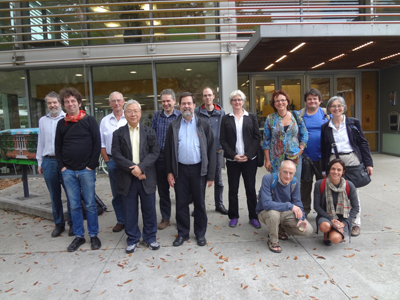
David Turner and his colleagues, all members of the SCOR Working Group 145 propose an overview of work for the development of a quality-controlled chemical speciation model for seawater and related systems, including descriptions of the different applications that can benefit from the model (open ocean acidification; micronutrient biogeochemistry and geochemical tracers; micronutrient behavior in laboratory studies; water quality in coastal and estuarine waters; cycling of nutrients and trace metals in pore waters; chemical equilibrium in hydrothermal systems; brines and salt lakes).
Reference:
Turner, D. R., Achterberg, E. P., Chen, C.-T. A., Clegg, S. L., Hatje, V., Maldonado, M. T., Sander, G.S., van den Berg, C.M.G., Wells, M. (2016). Toward a Quality-Controlled and Accessible Pitzer Model for Seawater and Related Systems. Frontiers in Marine Science, 3, 139. doi:10.3389/fmars.2016.00139