
Contribution of sandy beaches to the oceanic silica cycle
Dissolved silicon is an essential nutrient for phytoplankton development. Until now, the main sources of dissolved silicon in the ocean have been rivers, groundwater discharges and hydrothermal springs. In this study, Aparicio and colleagues (2025, see reference below) confirm and build on previous findings (Fabre et al., 2019) that suggest the potential contribution of a silicate-rich medium: sandy beaches.
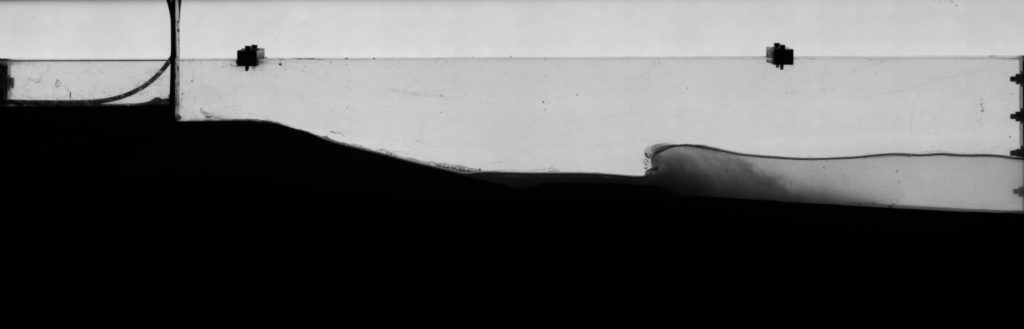
Authors built a laboratory experiment in a calibrated swell channel to estimate the impact of wave breaking on the dissolution kinetics of pure lithogenic quartz grains. Their results showed that intense wave agitation promotes quartz dissolution kinetics, considerably increasing the concentration of dissolved silicon in the water compared with an inert medium. Extrapolating these results to a global scale using satellite data, a global silica flux to the ocean was estimated at around 8.3 Tmol of silicon per year, an amount comparable to that contributed by rivers, hitherto considered the main silica input to the ocean.
This finding calls into question the commonly accepted idea of an oceanic silicon cycle in equilibrium. If these additional inputs are confirmed, they are likely to impact marine ecosystem dynamics and long-term carbon storage, which, as recently suggested, reinforces the hypothesis that biological pump activity remains undervalued (Ricour et al., 2023).
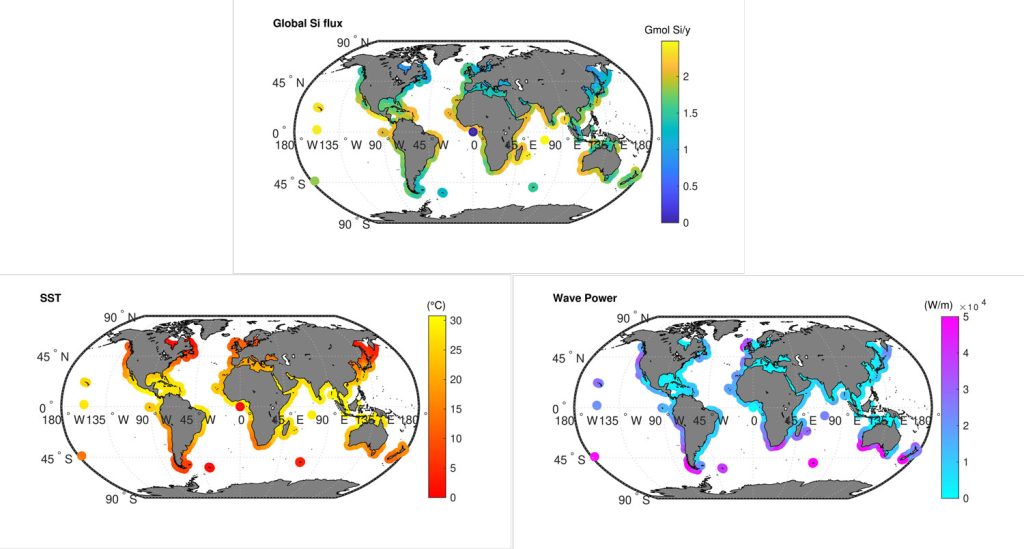
(1) Map of the Si inputs: Indicates the contribution of sandy beaches to the input of silicon into the ocean, based on modeled flux estimates.
(2) Map of SST: Represents the spatial distribution of average sea surface temperature per latitude degree.
(3) Map of Wave power: Illustrates the wave energy surging on sandy beaches.
In the model, quartz dissolution is propotional to (1) the sea surface temperature (SST), the higher the temperature, the faster the dissolution and (2) wave power wipping out the boundary layer of dissolved Si around the grains, allowing for permanent dissolution.
References:
Aparicio, M., Le Bihan, A., Jeandel, C. et al. Contribution of sandy beaches to the global marine silicon cycle. Nat. Geosci. (2025). Access the paper: https://doi.org/10.1038/s41561-024-01628-6
Fabre, S., Jeandel, C., Zambardi, T., Roustan, M., & Almar, R. (2019). An Overlooked Silica Source of the Modern Oceans: Are Sandy Beaches the Key? Frontiers in Earth Science, 7. Access the paper: https://dx.doi.org/10.3389/feart.2019.00231
Ricour, F., Guidi, L., Gehlen, M. et al. Century-scale carbon sequestration flux throughout the ocean by the biological pump. Nat. Geosci.16, 1105–1113 (2023). Access the paper: https://doi.org/10.1038/s41561-023-01318-9