Changing the cadmium : phosphorus paradigm?
The well-established strong linear relationship linking dissolved cadmium (Cd) and phosphorus (P) concentrations in seawater is at the origin of the attraction of Cd as a proxy for PO4 in […]

This section presents the GEOTRACES scientific activities.
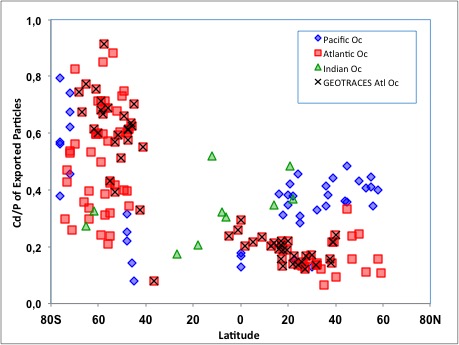
The well-established strong linear relationship linking dissolved cadmium (Cd) and phosphorus (P) concentrations in seawater is at the origin of the attraction of Cd as a proxy for PO4 in […]
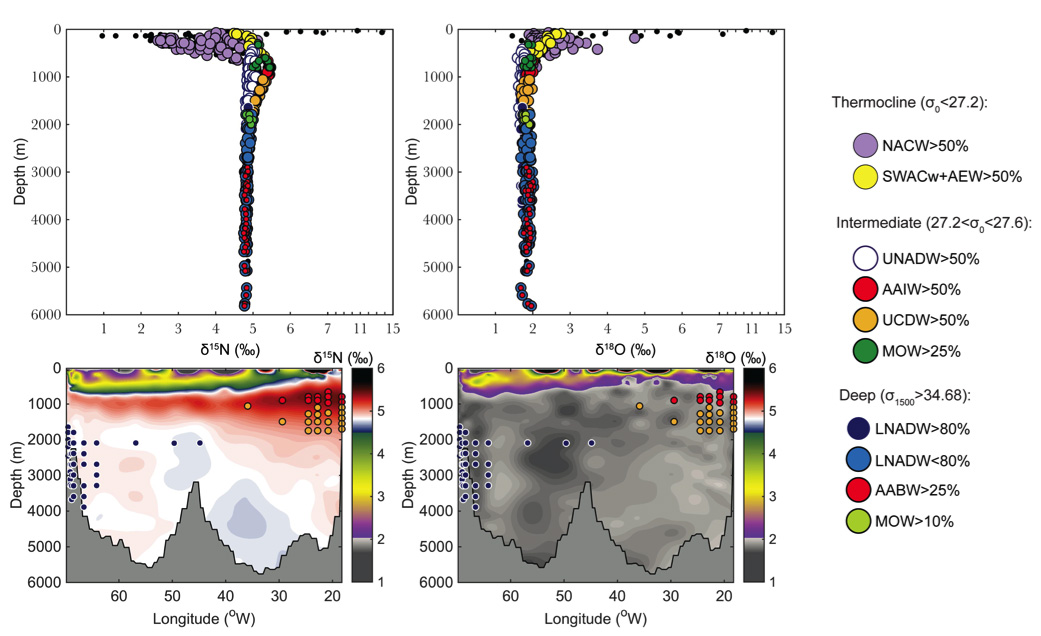
The distribution of the δ15N and the δ18O in the U.S. GEOTRACES North Atlantic zonal transect (GA03 section) provides an insight on the interaction between aspects of the circulation of […]
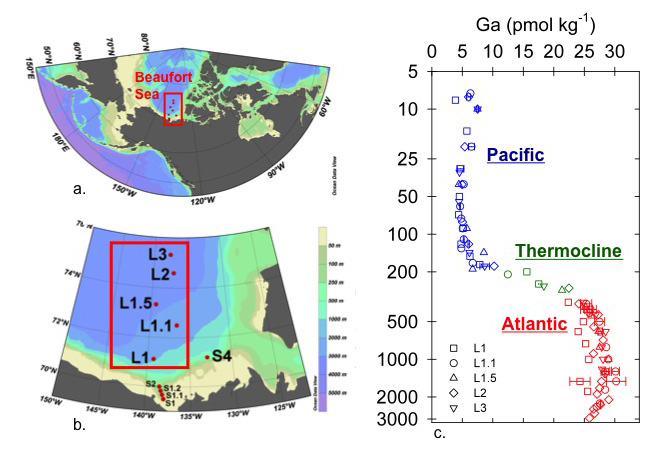
Mc Allister and Orians (2015, see reference below) present the first dissolved Ga (DGa) data ever reported in the Arctic. DGa behaves very conservatively, helping to constrain the mixing of […]
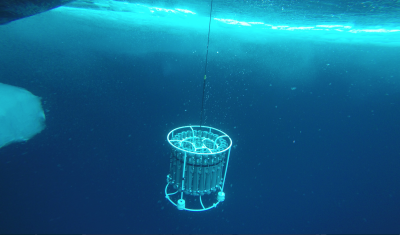
GEOTRACES has designed a three-pronged synthesis of results effort covering the main scientific themes of the programme: Supply and removal of trace elements and isotopes (TEIs) at ocean interfaces Internal cycling of […]
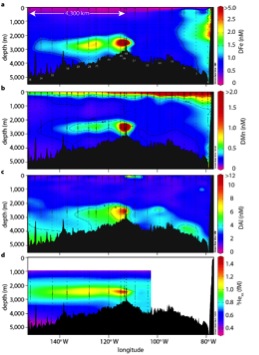
Data from the US GEOTRACES Eastern Pacific Zonal Transect (EPZT, GP16) demonstrate that lateral transport of hydrothermal iron, manganese and aluminium extends up to 4000 km west of the southern […]
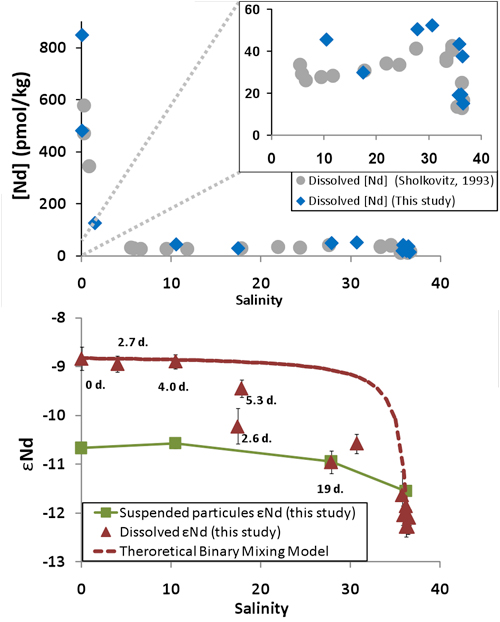
For the first time, neodymium (Nd) isotopic compositions have been measured together with dissolved and colloidal Rare Earth Elements (REE) concentrations in the Amazon estuary salinity gradient, as part of […]
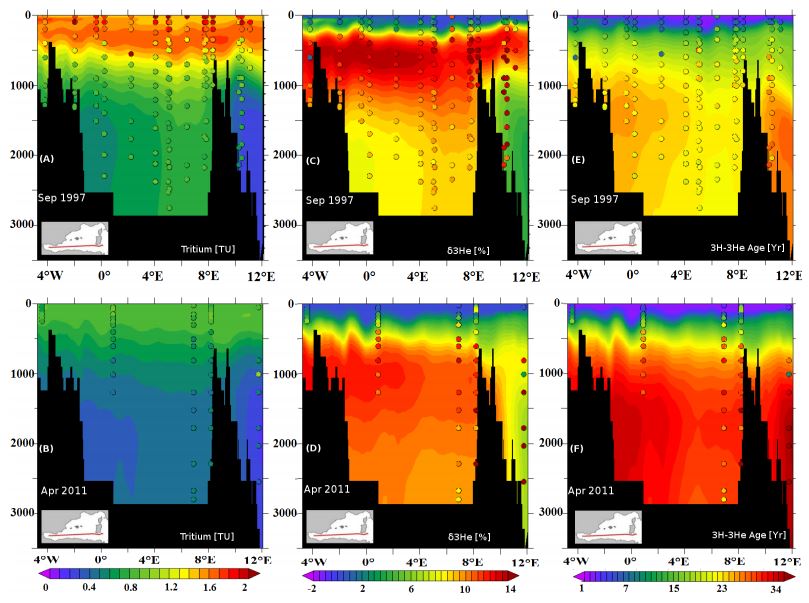
For the first time, a numerical study proposes the simulation of the anthropogenic tritium (3H) invasion as well as the distribution of its decay product helium-3 (3He) using a high-resolution […]
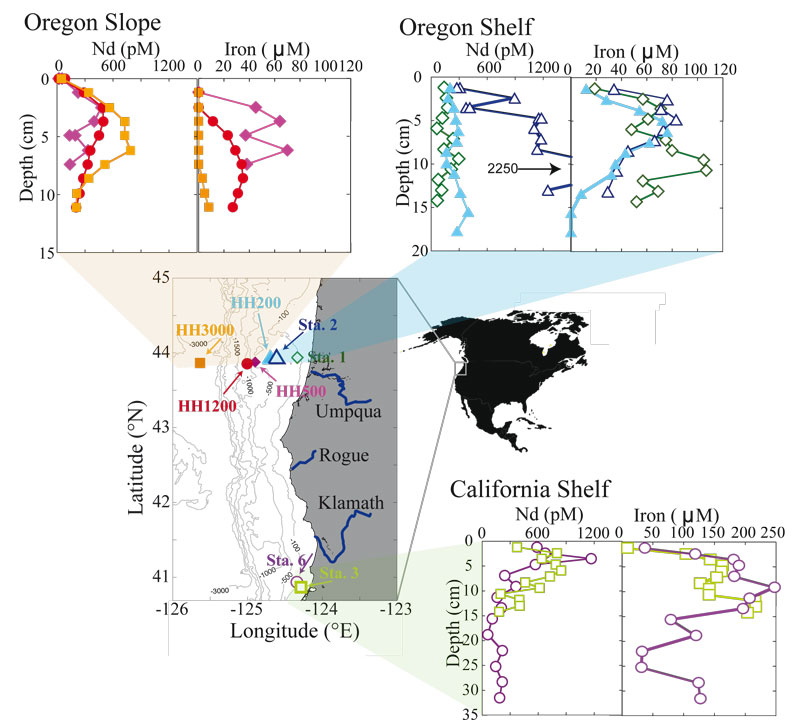
This work highlights the importance of the sedimentary source of dissolved Rare Earth Elements (REE) to the oceanic waters. Indeed, strong subsurface REE concentration maxima are evidenced in pore fluids […]
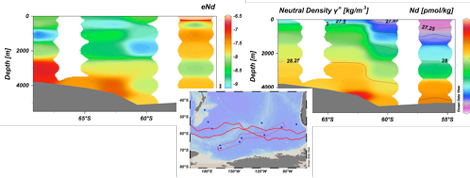
The first seawater neodymium isotopic compositions (εNd) and neodymium concentrations [Nd] profiles across the South Pacific circum-Antarctic fronts have been published recently (Basak et al., 2015, see reference below). Thanks to […]