This section presents the GEOTRACES scientific activities.
Using ICPMS/MS to determine manganese, iron, nickel, copper, zinc, cadmium and lead concentrations on less than 40ml of seawater
Jackson and co-workers (2018, see reference below) first did a classical offline preconcentration of small seawater aliquots using a SeaFast system. More innovative is the use of a state of […]
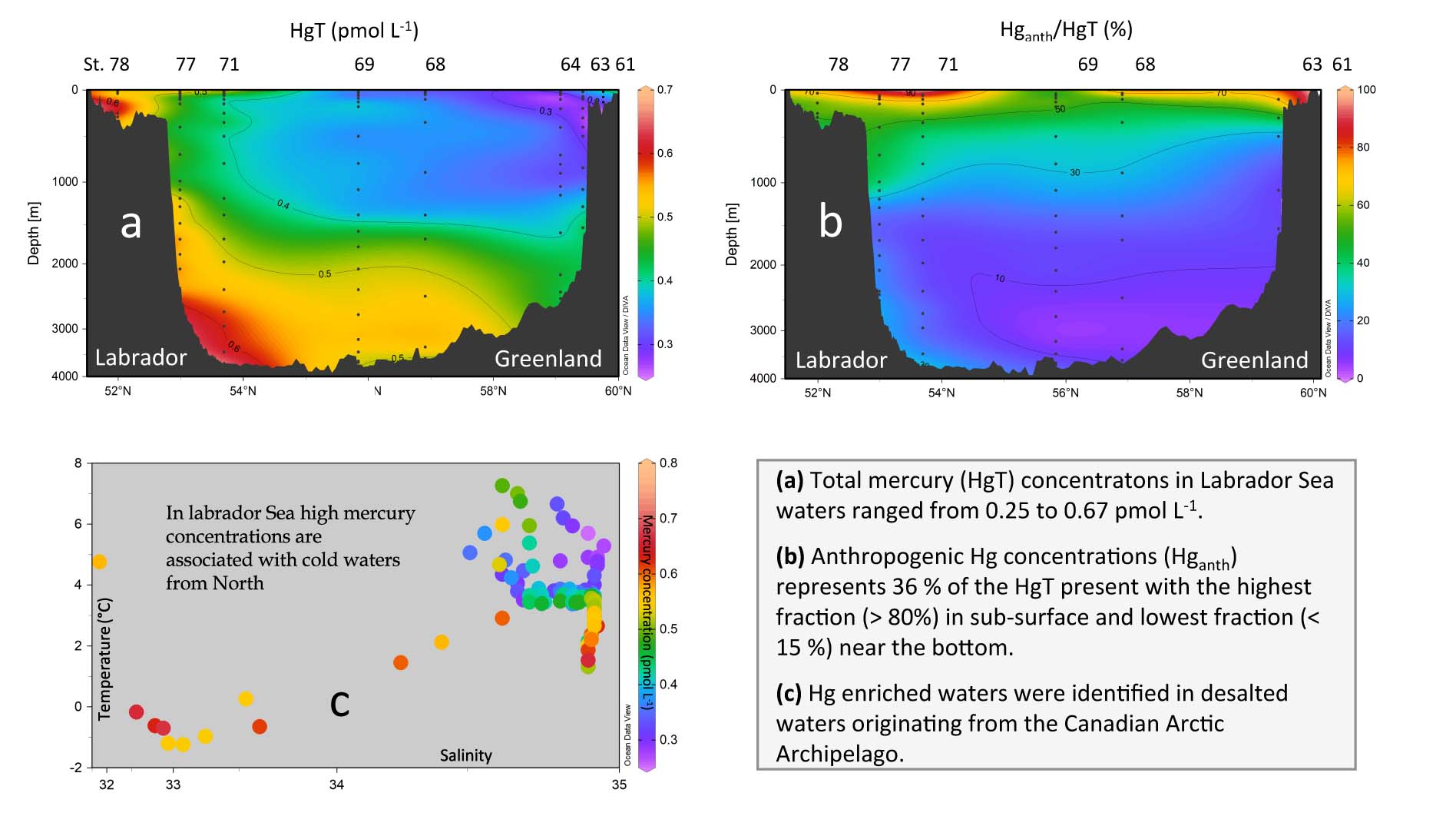
Arctic rivers are discharging organic matter enriched in mercury to the Labrador Sea
In the framework of GEOVIDE-GEOTRACES GA01 cruise (spring 2014), Cossa and co-workers (see reference below) measured the first high-resolution mercury (Hg) distribution pattern along a transect from Greenland to Labrador […]
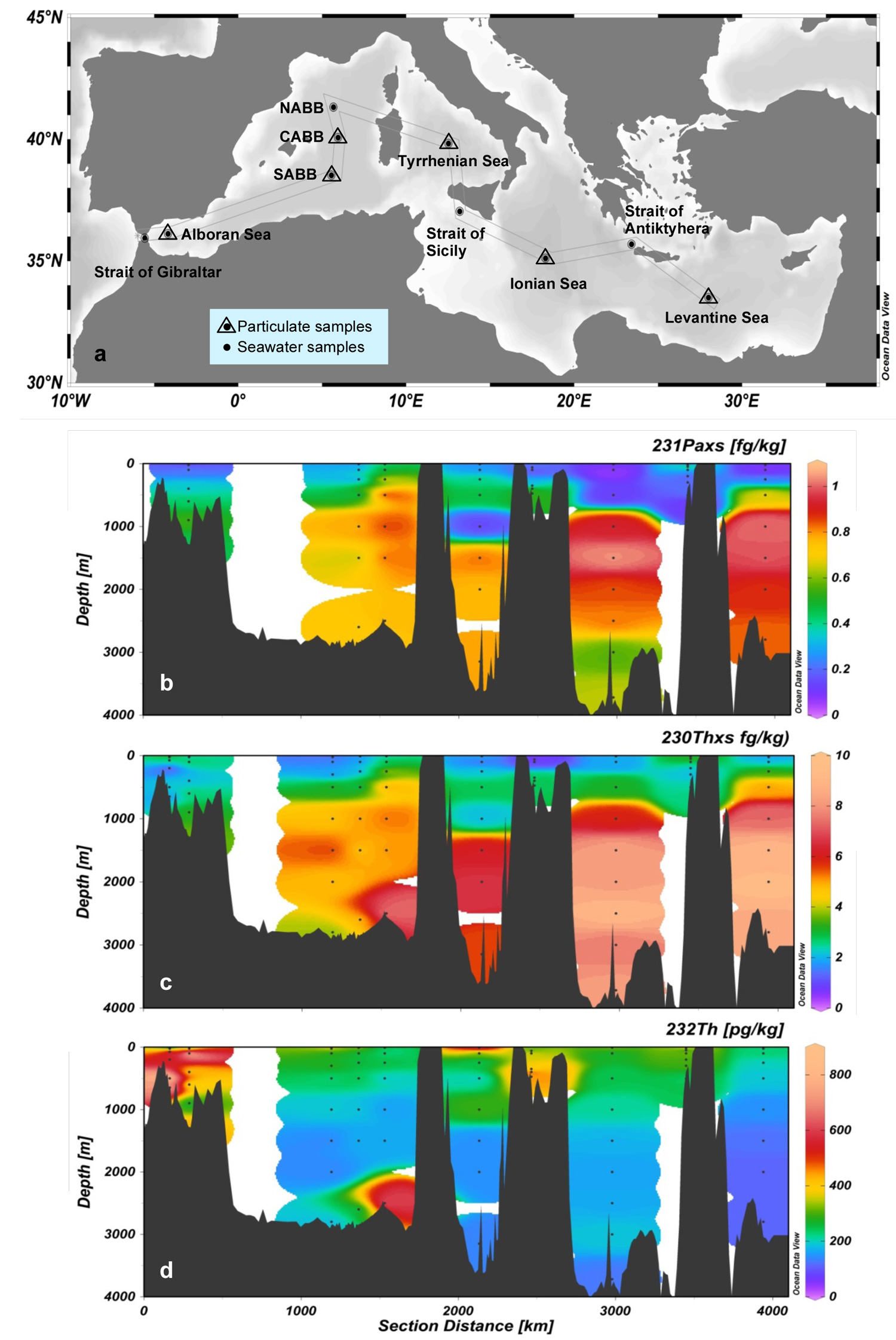
Astonishing protactinium and thorium profiles in the Mediterranean Sea
In the framework of the GEOTRACES cruise along the GA04 section in the Meditterranean Sea, Gdaniec et al. (2018, see reference below) measured thorium (Th) and protactinium (Pa) isotope distributions […]
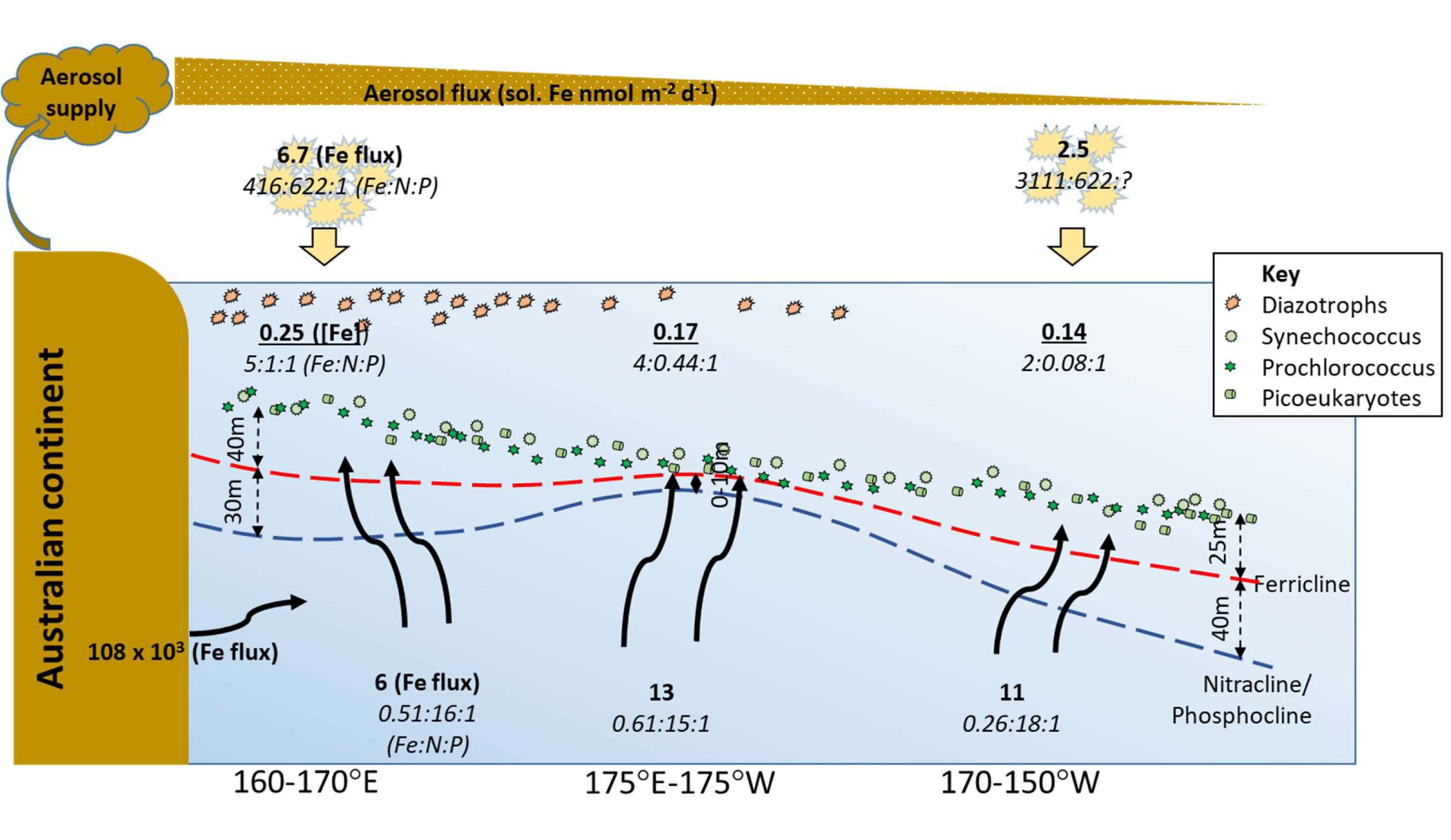
Surface South Pacific ecosystems reflect the availability of the nutrients iron, nitrate and phosphate
Thanks to a high resolution section across the South Pacific (150°E-150°W, GEOTRACES GP13 cruise), Ellwood and co-workers (2018, see reference below) identify that the gradient of sources and fates of […]
Why did the concentration of atmospheric carbon dioxide rise so much and so quickly during the last deglaciation?
During the Last Glacial Maximum, the deep southern Pacific waters were stratified, efficiently accumulating old, CO2 rich waters. Basak and co-authors (2018, see reference below) measured neodymium isotopes in sediment […]
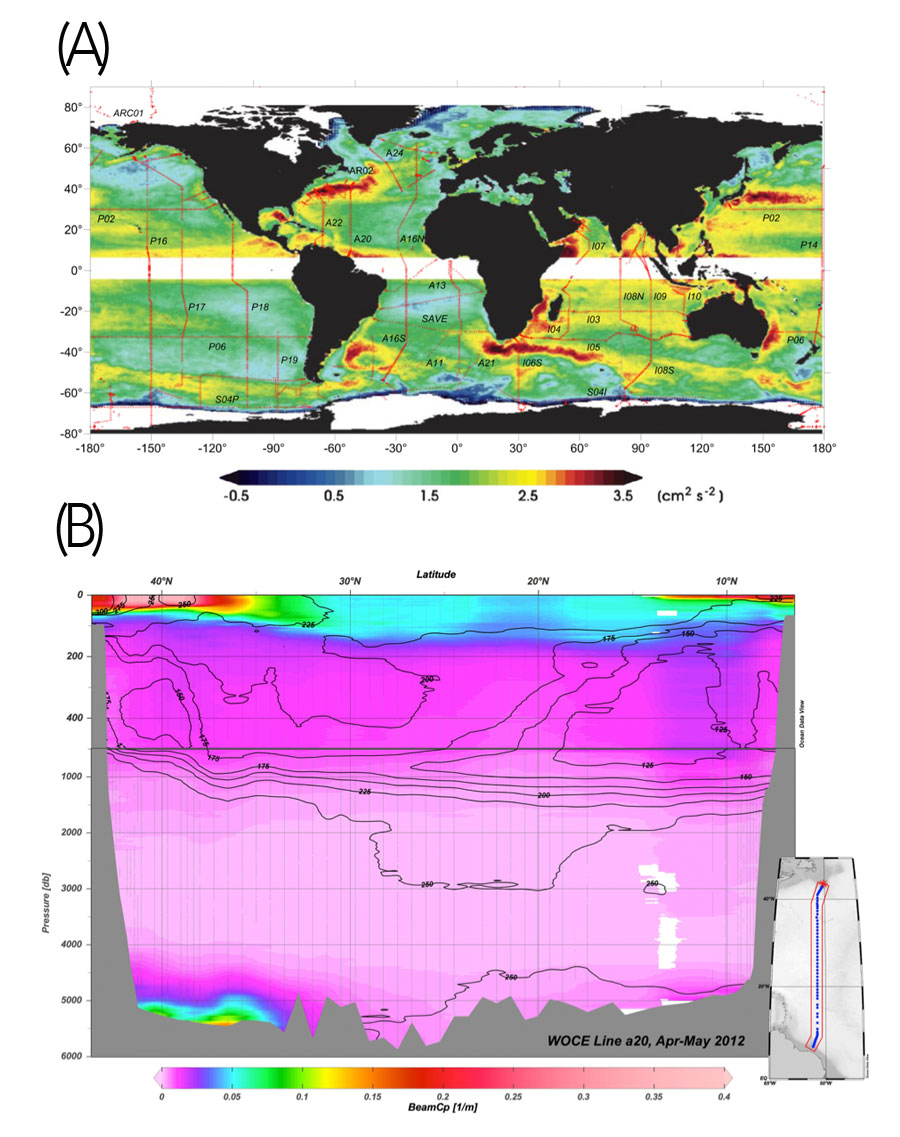
Particle distribution in repeated ocean sections and sediment resuspension
This is the first compilation of an expansive data base of transmissometer data on a decadal period of time. More than 7376 stations have been analyzed for “cp” value, a […]
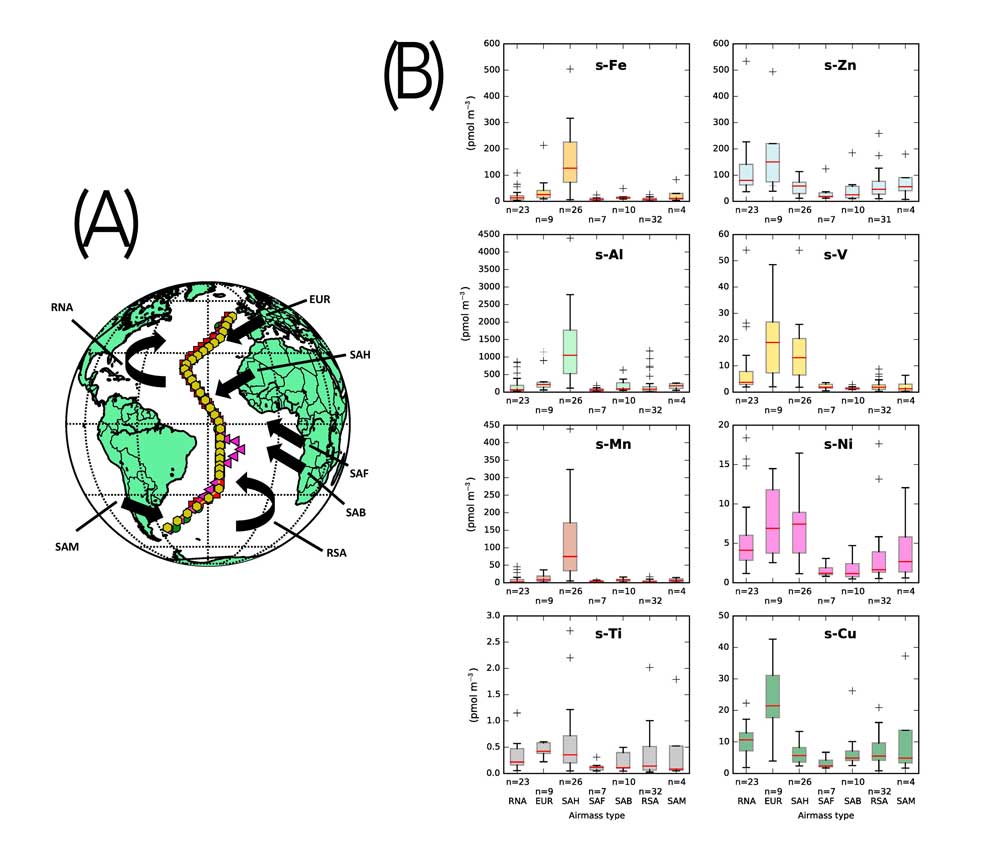
Where, how and which trace elements are released from dust at the sea surface?
Alex Baker and Tim Jickells (2017, see reference below) propose to answer to this question thanks to analysis of aerosols collected in the framework of the Atlantic Meridional Transect (AMT). […]
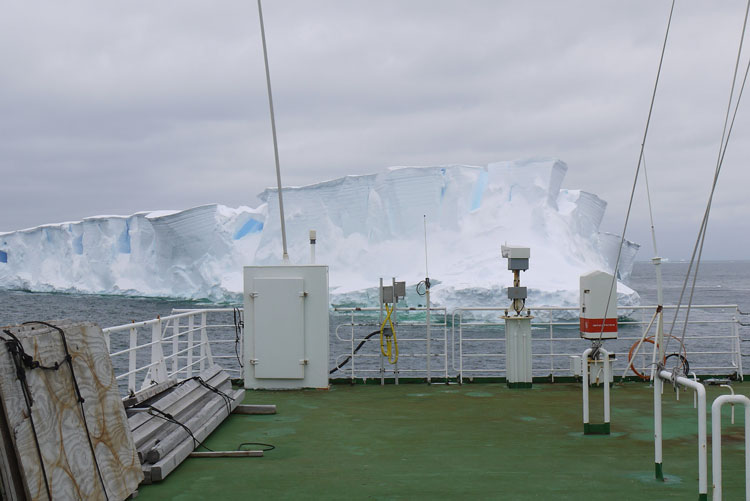
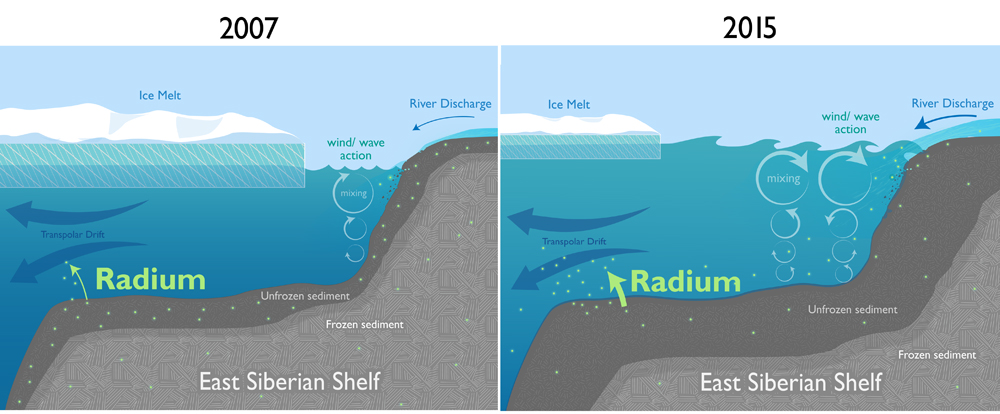
Climate change induced spectacular increase of the land-ocean inputs in the Arctic Ocean
Measurements of radium-228 (228Ra) in the framework of the 2015 U.S. GEOTRACES Arctic Transect (GN01), revealed that the surface water content of this tracer has almost doubled over the last […]
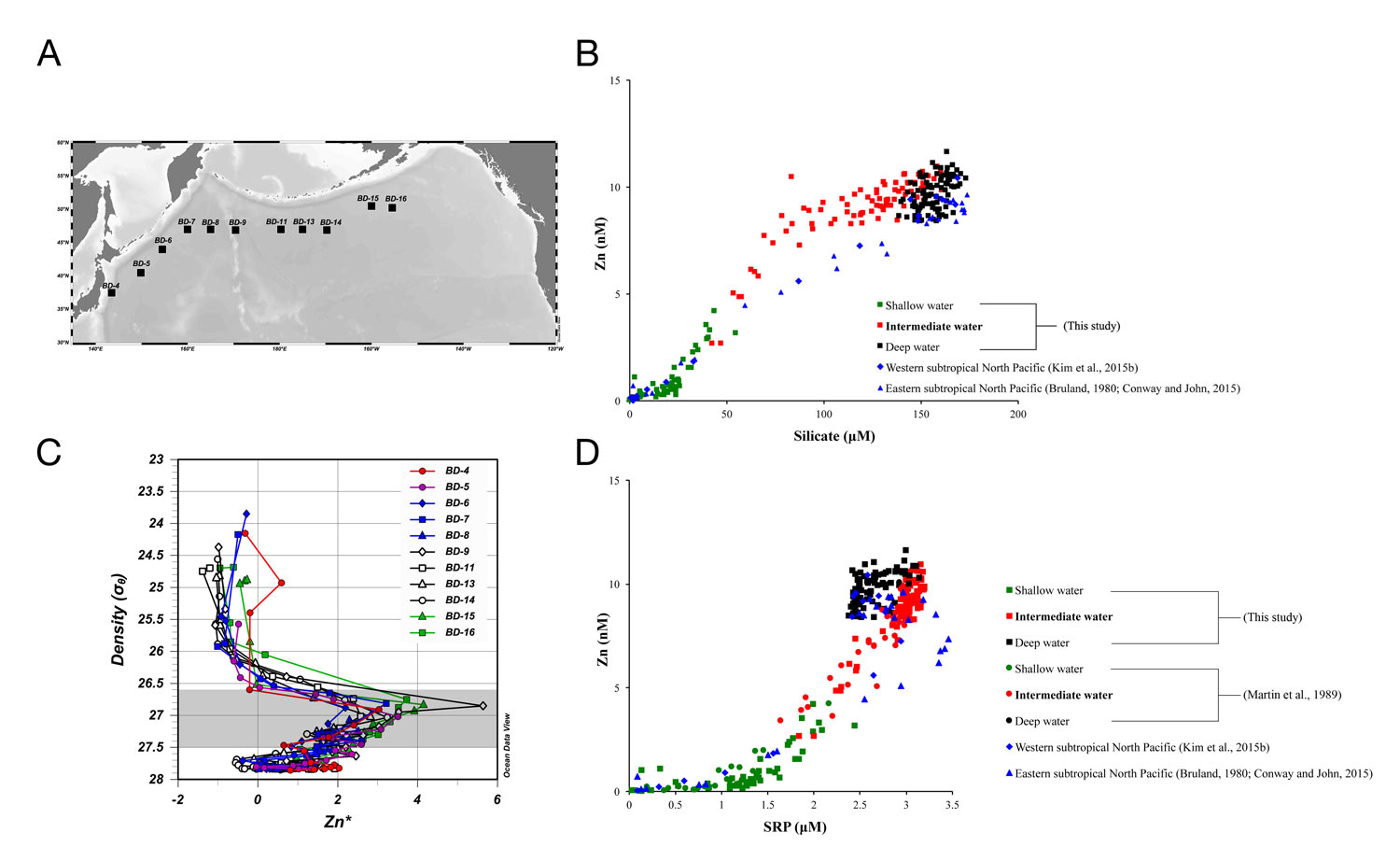
Dissolved zinc and silicate decoupling in the North Pacific Ocean
Large-scale distributions of dissolved zinc (Zn) in the western and central subarctic North Pacific Ocean was established as part of the North Pacific GEOTRACES section GP02. Kim and co-workers could […]
Rechercher
We use cookies to guarantee you the best experience on our site, and to make statistics of attendance (Google Analytics). If you continue to use this site we will assume that you are happy with it.