This section presents the GEOTRACES scientific activities.
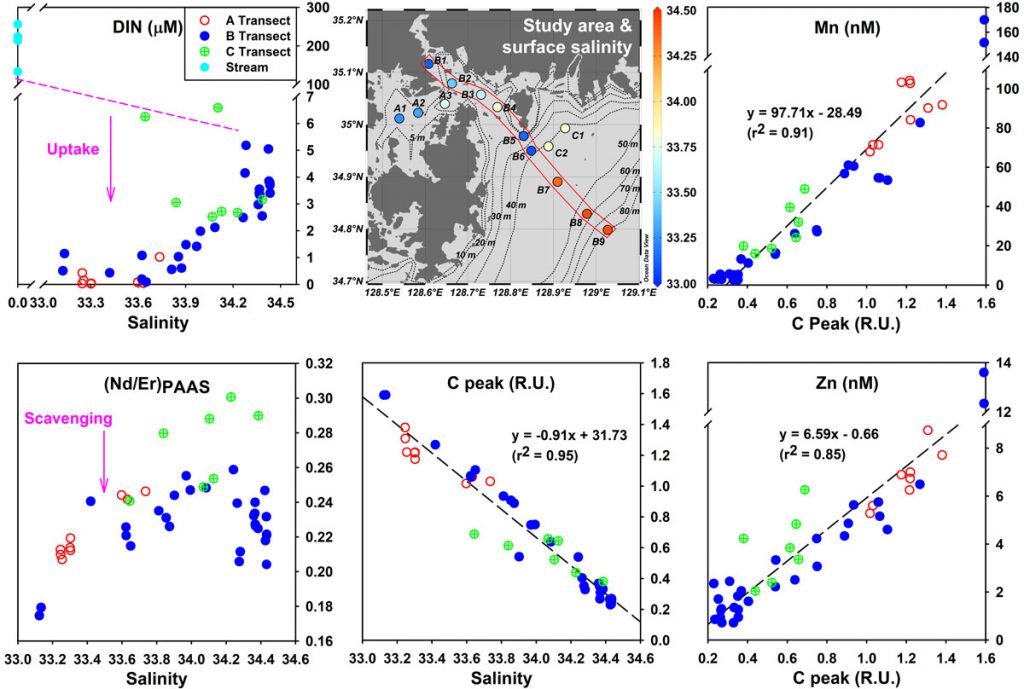
Surprising conservativity of trace metals along a costal embayment salinity gradient
Chen and co-workers analyzed an array of trace metals together with Rare Earth Elements in a salinity gradient in the Jinhae Bay, the largest semi-enclosed bay in South Korea…
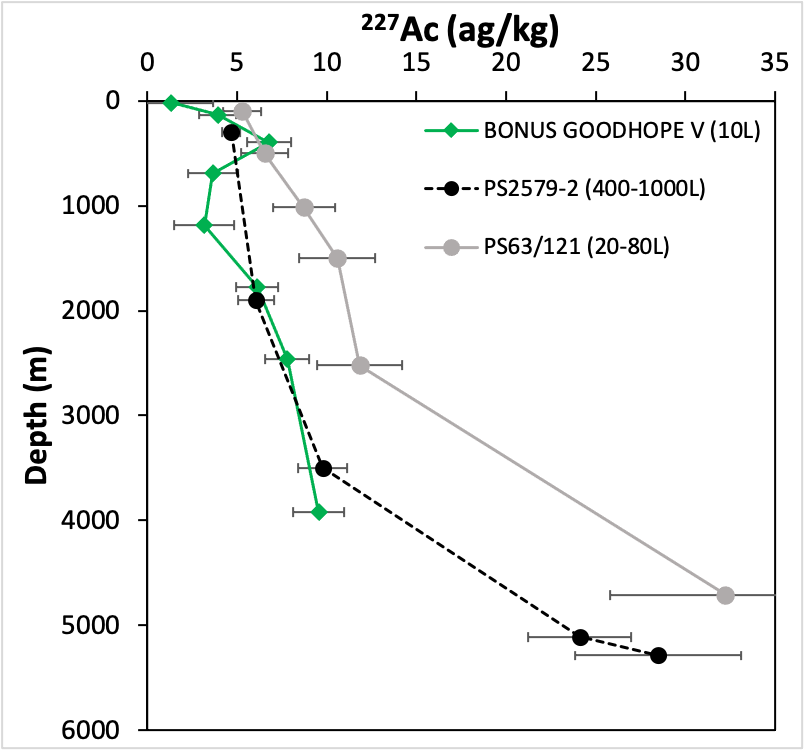
Measuring actinium-227 by mass spectrometry is feasible, sensitive and reliable!
Levier and co-authors have developed a new protocol measurement of the dissolved actinium in seawater.
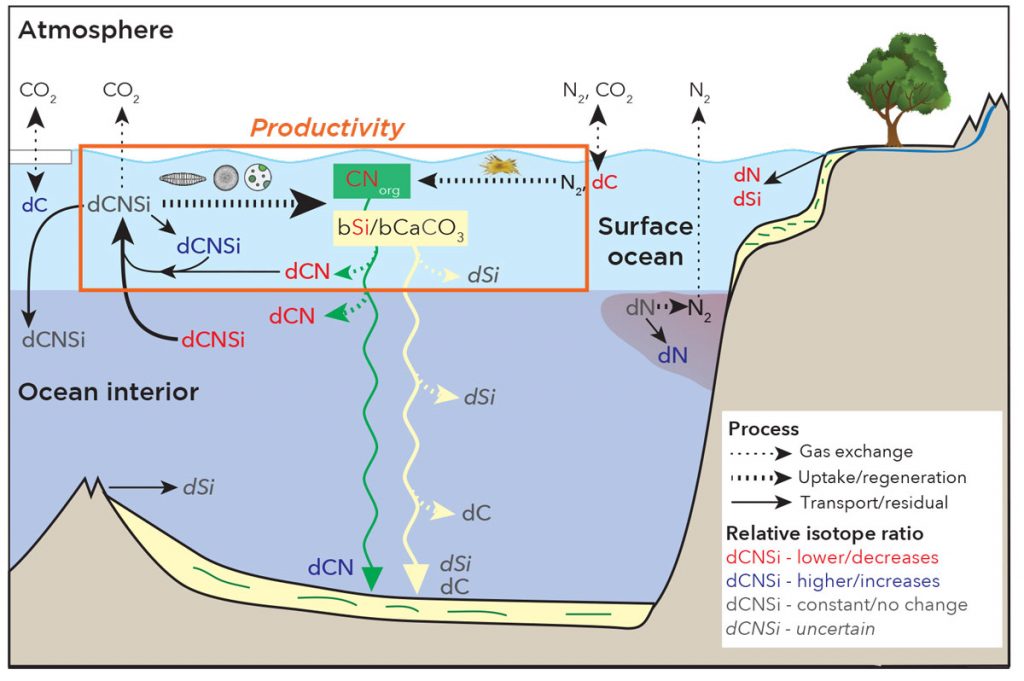
Pros and cons of carbon, nitrogen and silicon as tracers of modern and paleo-productivity
Farmer and colleagues review the geochemical proxies based upon sedimentary isotope ratios of three abundant biologically mediated elements.
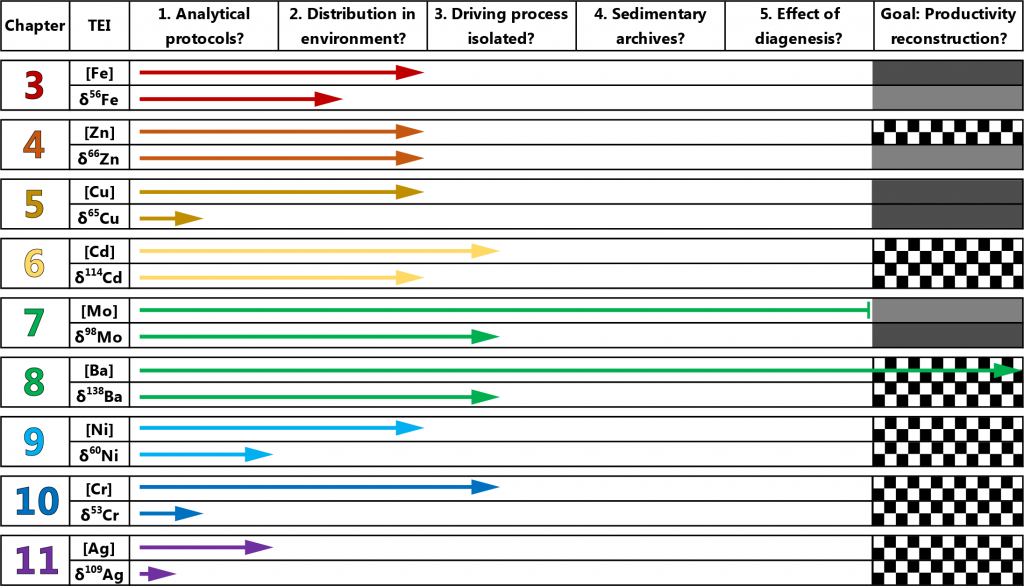
Pros and cons of nine bioactive trace elements as tracers of modern and paleo-productivity
Horner and co-authors assess whether nine bioactive trace metals and their isotopes can be used as paleo-productivity proxies.
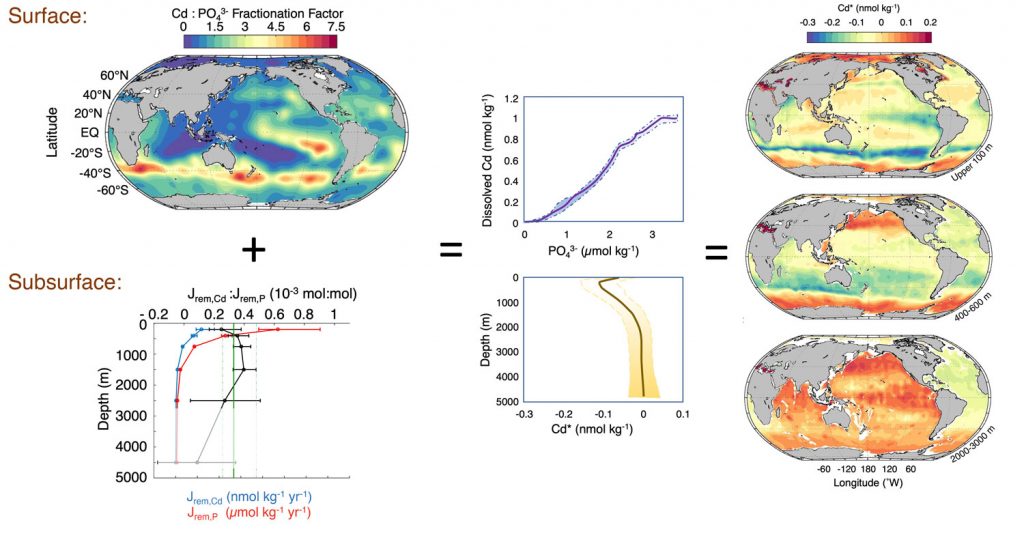
Controls of cadmium-phosphate systematic unraveled by Neural Networks and Ocean Circulation Inverse Model
Roshan and DeVries explore the similarities and contrasts between oceanic cadmium and phosphate cycles using an Artificial Neural Network mapping technique and Ocean Circulation Inverse Model.
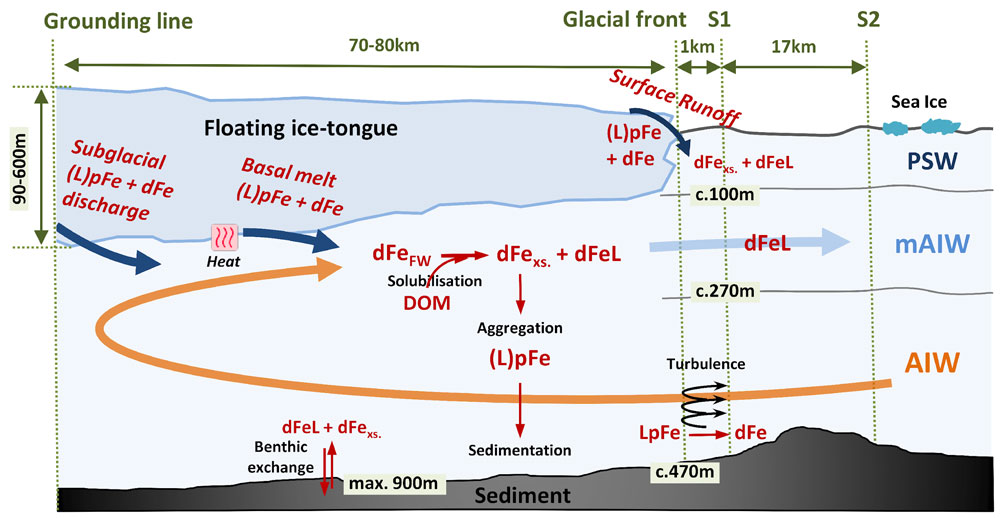
Retreat of large marine-terminating glaciers may increase iron supply to surface waters
The findings demonstrate that glacial retreat and loss of ice-shelves may potentially result in increases in dissolved iron supply to surface waters downstream of large marine terminating glaciers in future.
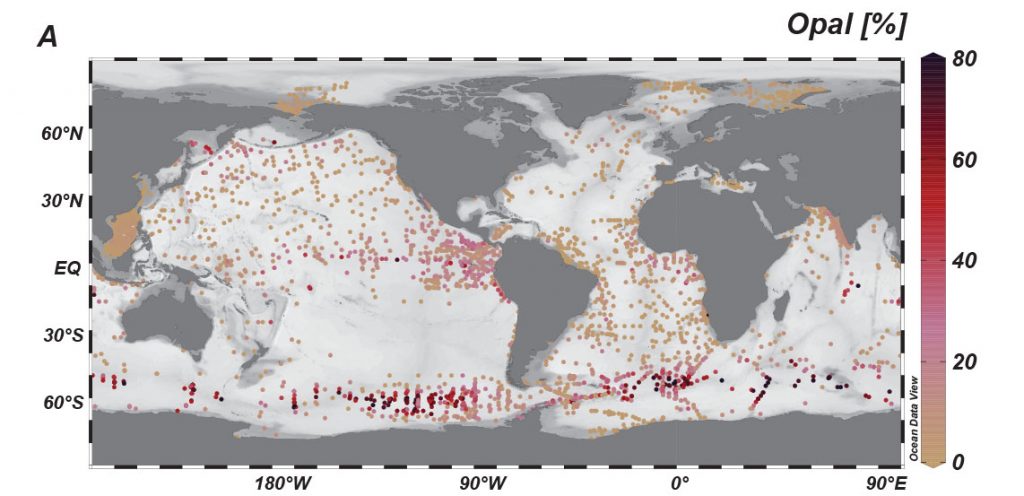
A new and more quantitative atlas of the deep-sea burial fluxes of major and trace elements
Among other findings, authors find that the new opal flux is roughly a factor of two increase over previous estimates having important implications for the global silicon cycle.
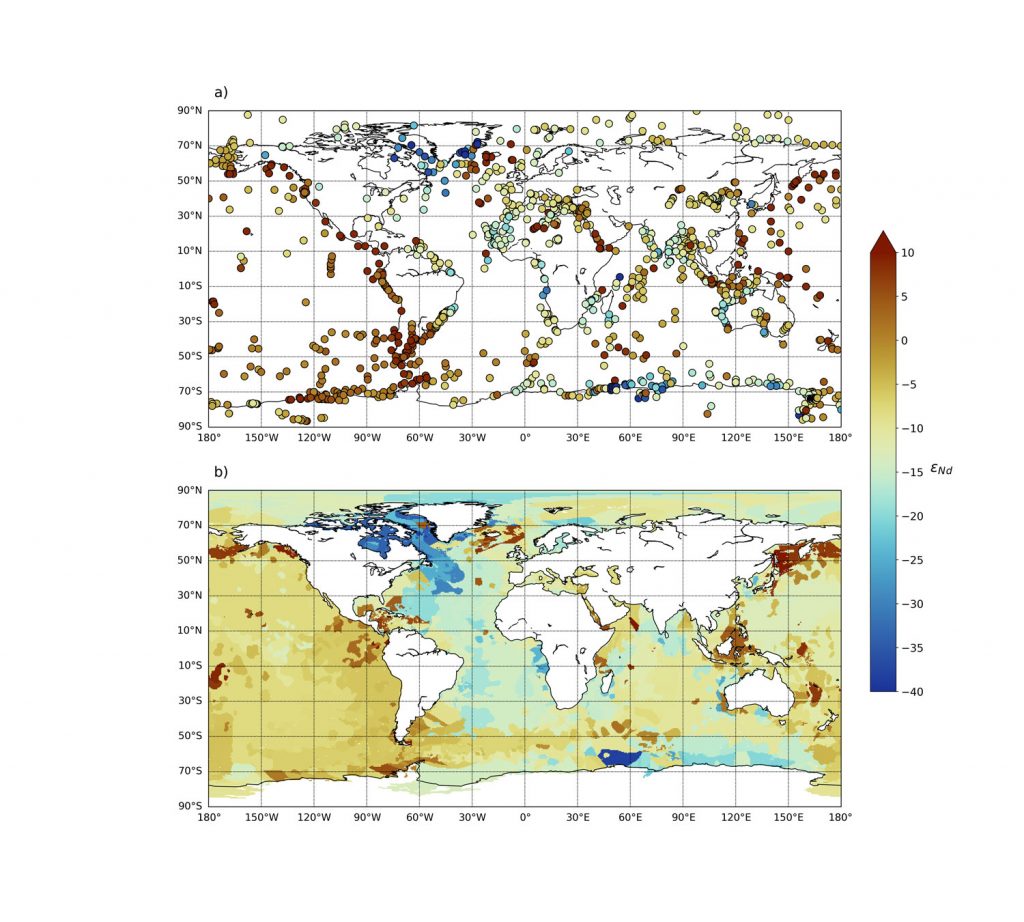
Updated compilation of the global continental and marine lithogenic neodymium isotopic measurements
This new compilation and gridded datasets offer a concrete way forward to improve the application of neodymium isotopes as a useful tracer of ocean circulation.
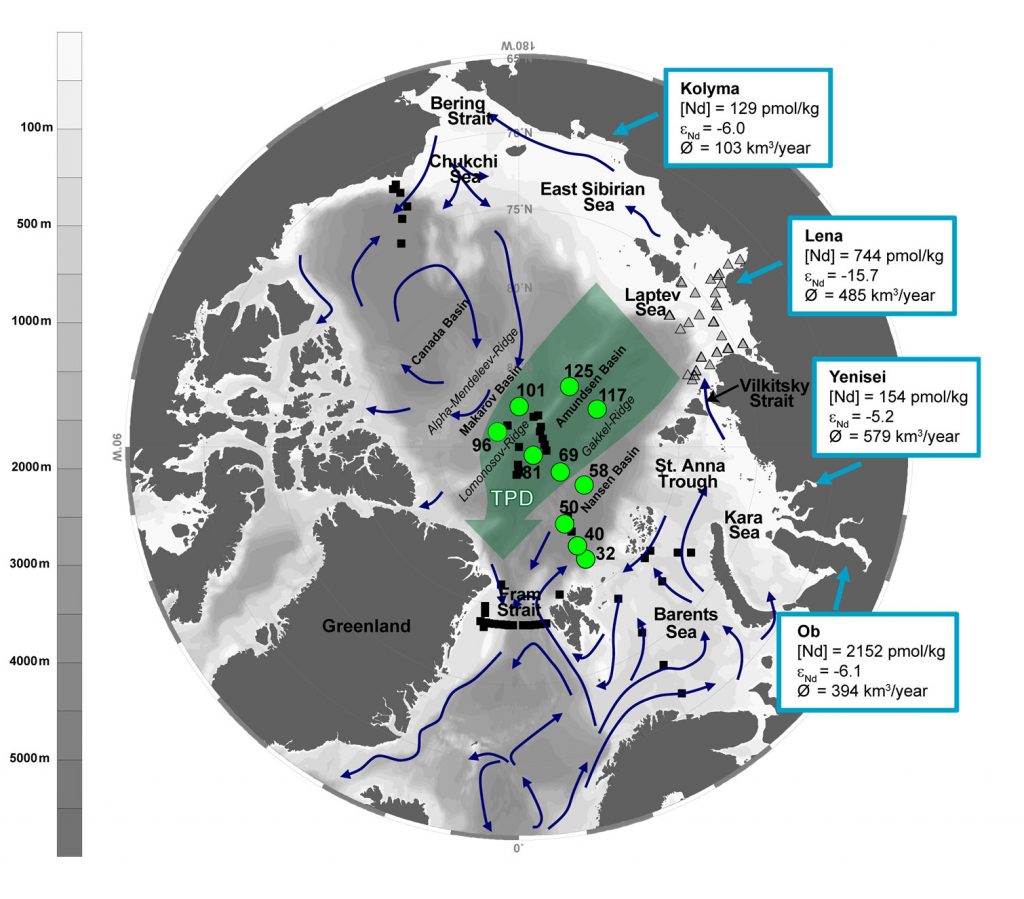
Neodymium concentrations and isotopes help disentangling Siberian river influences on the Arctic Ocean
Paffrath and co-autors followed the relative contributions of the main Siberian rivers to the waters of the Transpolar Drift using neodymium parameters.
Rechercher
We use cookies to guarantee you the best experience on our site, and to make statistics of attendance (Google Analytics). If you continue to use this site we will assume that you are happy with it.