
UK IronMan process study explores iron and manganese in the Southern Ocean
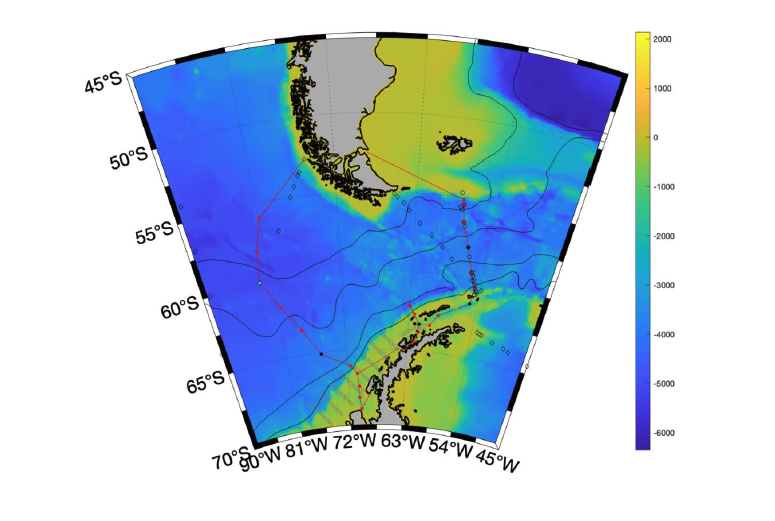
On 12 January, the Royal Research Ship (RRS) Sir David Attenborough left port to undertake a seven-week voyage, concluding on 25 February, from Punta Arenas (Chile) to Antarctica, as part of the IronMan (Iron and Manganese Impacts on the Future of Southern Ocean Ecosystems) GEOTRACES process study.
Led by Alessandro Tagliabue (University of Liverpool, UK), the IronMan expedition aims to improve understanding of how the micronutrients iron (Fe) and manganese (Mn) regulate primary production across the Southern Ocean, a region central to global biodiversity and carbon cycling.
Primary production in the Southern Ocean is considered to be dominantly regulated by iron and climate models project increasing future primary production with relatively high across-model confidence. However, recent work, spanning observations, experiments and models, reveals three key limitations in current models: (1) the neglect of the role of manganese, which has been shown to also be important in limiting Southern Ocean primary production, (2) the misrepresentation of historical trends in iron limitation, and (3) the failure to account for the unique physiological adaptations of Antarctic organisms. Because iron and manganese are both essential for photosynthesis and their supply, cycling, and biological demand remain poorly constrained, these omissions reduce the reliability of current climate model projections.
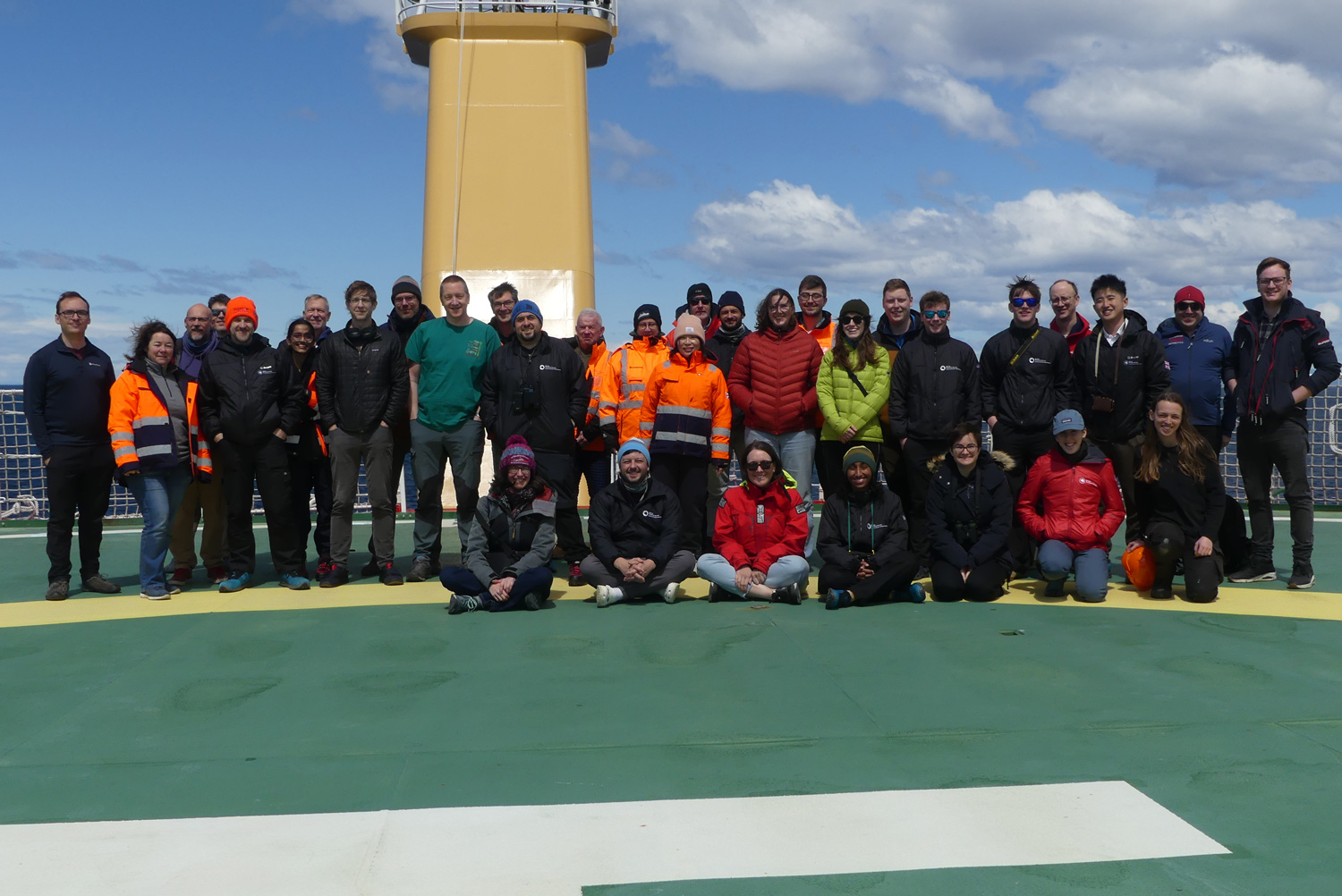
By integrating chemical and biological observations with targeted experiments, the team of international scientists on board the cruise will deliver essential data to make global ocean models more reliable and improve projections of how future change will affect the key Southern Ocean ecosystem.
The main objectives of IronMan are:
- Quantify variability in the supply, recycling, and removal of Fe and Mn across Southern Ocean regimes using ship-based and autonomous observations.
- Determine how biological cycling of Fe and Mn and phytoplankton acclimation vary across environmental gradients and experimental manipulations.
- Improve projections of Southern Ocean primary production by incorporating new observational and experimental constraints into models.
Drone footage: Lewis Bumstead.
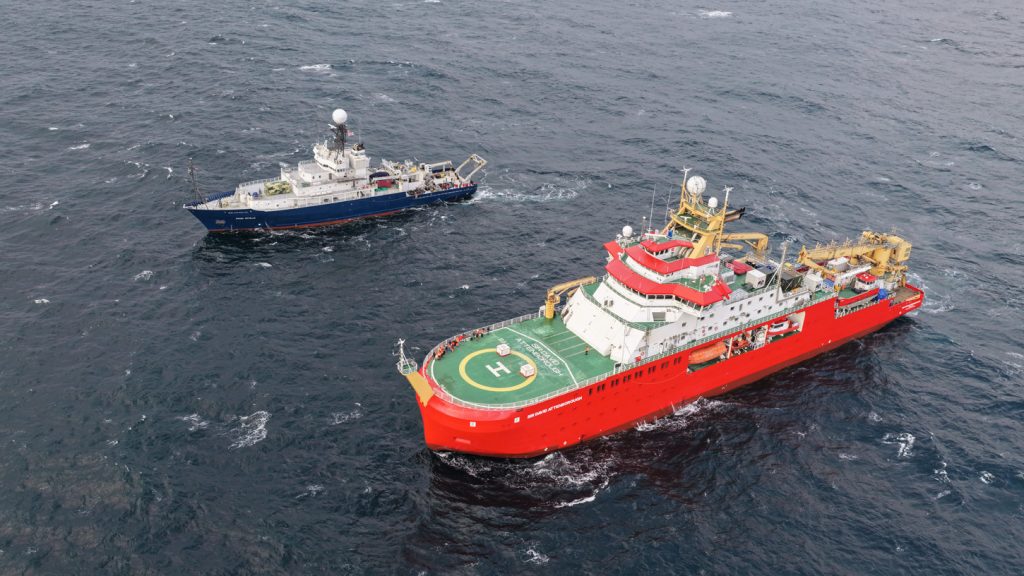
Drone picture: Lewis Bumstead.
Sources: GEOTRACES Process Study application form and NERC website.